
Some Digital Money Has an Off Switch
Some digital assets can be frozen. The section distinguishes stopping stolen assets from returning them, and asks how an honest person appeals an error.
Read this section →Scripture. Hope. Discernment.
The Seed War TrilogyA library of illustrated Bible studiesBegin the 14-day study Made for Forever →A monthly briefing by Michael Kendrick
Separate headlines. Connected questions.
What happens when technology begins to shape how we pay, see, decide—and whom we trust?
Latest published · November 2026 · No. 006
Face checks, frozen money and AI helpers with their own logins. Seven areas to understand—and practical ways to keep your judgment.
October 2026 developments, reviewed for the November issue
Published November 1, 2026

Follow what interests you
Search across 6 published editions, or choose a subject below. Each result opens the relevant section of the original article.
37 indexed sections · newest editions first
Try fewer topics, a different month, or a broader word such as “identity,” “payments” or “brain.”
Conceptual artwork from the published Convergence collection illustrates each subject. The images do not depict reported events or verified products.
Some digital assets can be frozen. The section distinguishes stopping stolen assets from returning them, and asks how an honest person appeals an error.
Read this section →
Identity checks are spreading across services. Plan recovery routes, preserve alternatives and help someone who cannot pass an automated check.
Read this section →
AI helpers gain accounts and permission to act. Keep approval for important messages and purchases, and learn how to inspect or stop their work.
Read this section →
Recognition moves into shared rooms and public spaces. A device owner’s choice and a bystander’s consent remain different questions.
Read this section →
Speech-restoration research and consumer brain-sensing wearables serve different purposes. Their abilities, evidence and regulatory stages must stay distinct.
Read this section →
Religious and technology leaders warn against surrendering human judgment. Michael connects that responsibility with the biblical freedom to refuse false worship.
Read this section →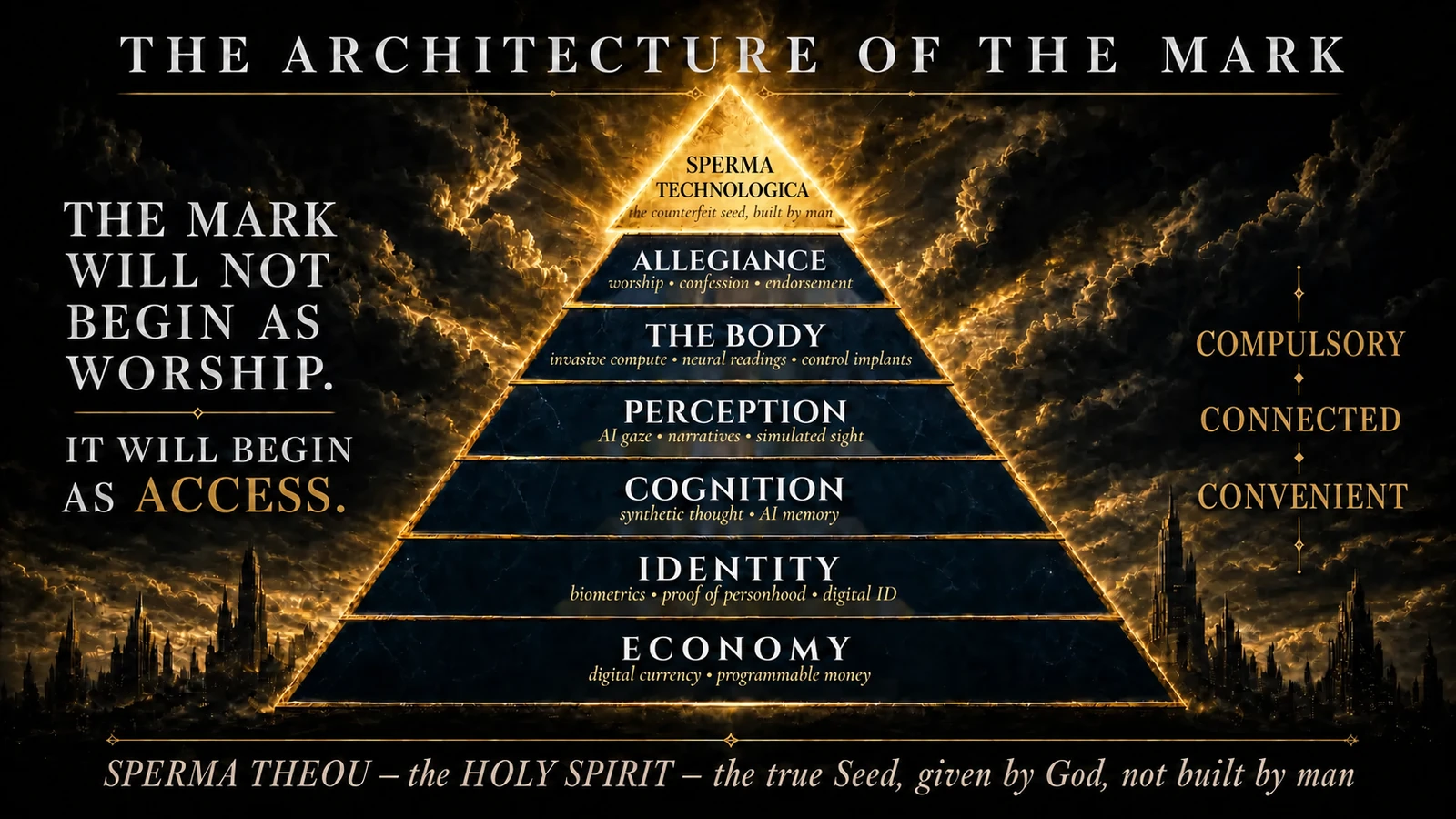
An account or product policy cannot confer spiritual life. Michael explains his framework term alongside the Christian hope of new life in Christ.
Read this section →As software gains ways to buy and pay, the crucial question becomes how much authority the person has actually delegated.
Read this section →
People and software agents need ways to be recognized. A credential can grant access, but the receiving system decides whether to accept it.
Read this section →
Payment conditions and approval screens deserve close reading when an assistant can carry out a purchase on your behalf.
Read this section →An assistant that continues working can be useful. The issue asks how a person can see, limit and interrupt the authority it exercises.
Read this section →
Ambient assistance can frame the situation before you ask a question. The section follows the connection between perception and advice.
Read this section →
Brain interfaces can restore communication and control. The issue weighs the benefit alongside the boundaries around bodily access.
Read this section →Michael distinguishes today’s tools from Revelation’s threshold of worship and allegiance, asking who retains the freedom to refuse.
Read this section →Institutional duties and a person’s freedom to refuse are different. The September issue examines that distinction in digital payments.
Read this section →Identity checks spread through games, phones and digital services, while machines begin presenting credentials of their own.
Read this section →Company claims about research agents sit beside evidence of criminal use. The section preserves the distinction between claims and independent proof.
Read this section →A recording light can signal a camera is on. It does not settle whether the people being recorded have consented.
Read this section →Paradromics and CorTec illustrate different research paths. Trial access and Breakthrough designations are distinguished from permission to sell.
Read this section →From weapons to church life, the issue asks where human responsibility remains when more decisions pass to software.
Read this section →Investment, computing power and AI-assisted research give the superintelligence race an institutional shape.
Read this section →Government access and rules influence who may use advanced AI. Governance is treated as a force across the framework, not an extra tier.
Read this section →Different approaches to digital money put proposed infrastructure, restrictions and institutional duties side by side.
Read this section →Digital wallets, proof of humanity, AI-agent credentials and age checks increasingly touch the same transaction path.
Read this section →Neural-data protections show why information from the nervous system deserves its own privacy questions.
Read this section →AI eyewear moves toward everyday assistance, with cameras and sensors giving the assistant a wearer’s point of view.
Read this section →The issue asks what happens when Christians begin to trust AI with spiritual counsel and moral formation.
Read this section →Technology leaders put dates on their expectations for more powerful AI. Read their forecasts alongside the article’s questions about control.
Read this section →The July issue follows digital-money legislation and proposed launch schedules in Europe and Russia.
Read this section →Surgery-free neural decoding and implant research raise practical questions about access to brain signals and the limits of consent.
Read this section →Camera-equipped earbuds and AI glasses bring an assistant closer to what the wearer sees and hears.
Read this section →A synthesis of the July signals across the framework, including biometric identity and the spiritual question of authority. The connections are Michael’s interpretation.
Read this section →A digital-euro committee vote advances a proposed framework. The section distinguishes legislative preparation from an issued currency.
Read this section →A survey of brain-interface research and human studies, with different clinical and regulatory stages kept in view.
Read this section →AI helps develop newer AI. That is a significant capability, but the article distinguishes assistance from independent self-improvement.
Read this section →Reported plans for AI glasses point toward assistance inside everyday life. Plans and possible uses are distinguished from shipping features.
Read this section →Michael connects identity, money, cognition and bodily interfaces in his theological framework. This is interpretation, not evidence of one coordinated system.
Read this section →The monthly record
Face checks, frozen money and AI helpers with their own logins. Seven areas to understand—and practical ways to keep your judgment.
October 2026 developments, reviewed for the November issueAI agents receive wallets, credentials and permission to act. Who keeps the authority to say no?
September developments and early October updatesDigital-ruble access, identity checks, camera consent and the last human decision.
An August 2026 review, with September 1 developmentsPersonhood credentials, neural-data laws, AI eyewear and spiritual counsel.
Reporting through August 2, 2026Superintelligence forecasts, digital-money timetables and surgery-free neural research.
Reporting through July 13, 2026Digital money, brain interfaces and AI begin to connect.
A June 2026 snapshotStay with the story
Convergence is our monthly review. Join the existing Watch List for your free AI and Bible Prophecy Report, a short welcome email series, and ministry updates. Unsubscribe anytime.
Join the Watch List →Privacy policy · Articles remain open to read.