The short answer
Yes, the Bible says we are living in the last days—but that statement means more, and predicts less, than many headlines suggest. Peter applied “the last days” to the outpouring of the Spirit at Pentecost (Acts 2:16–17). Hebrews says God has spoken “in these last days” by His Son (Hebrews 1:1–2). The last days began with Christ’s first coming and move toward their appointed consummation in His return.
Scripture also teaches that no one knows the day or hour (Matthew 24:36) and that the times and seasons remain in the Father’s authority (Acts 1:7). Wars, rumors of wars, famines, and earthquakes are real sorrows, but Jesus told His disciples, “see that ye be not troubled” and “the end is not yet” (Matthew 24:6). Watchfulness is not date-setting, and urgency is not panic.
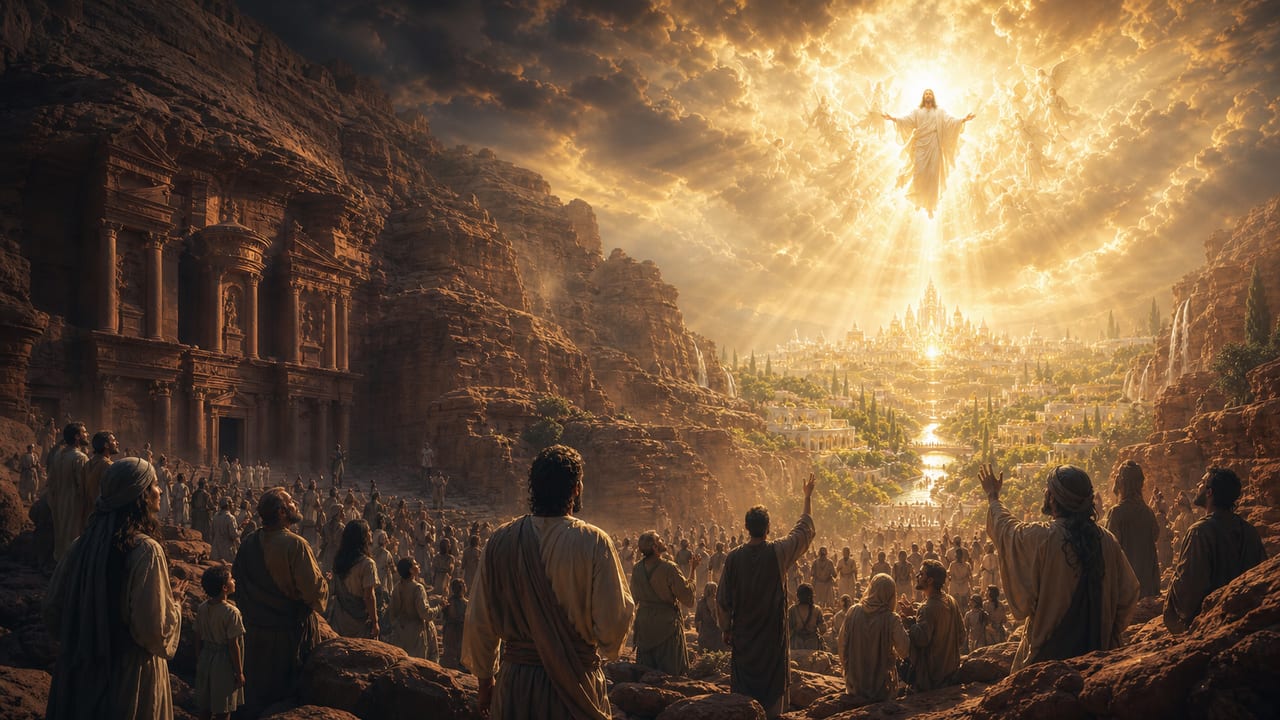
What may we say with confidence? Jesus Christ will return, the dead will be raised, evil will be judged, God’s people will be gathered, and creation will be made new (1 Thessalonians 4:16–17; 1 Corinthians 15:51–52; Revelation 21:1–5). Christians disagree about the sequence. They need not disagree about the King.
Free Biblical Briefing
The Mark Will Not Look Like a Mark
Receive The Watchman’s Dossier—a focused guide to Revelation 13, AI, digital identity, programmable money, biometric control, and neural interfaces.
Enter your email once to unlock every free resource on this site.
Receive your free resource, a short welcome email series, and ministry updates. Unsubscribe anytime. Privacy policy.
What Does “End Times” Mean?
End Times is a modern umbrella phrase. Scripture uses several expressions: “the last days,” “the last time,” “the time of the end,” “the end of the world” or age, and “the day of the Lord.” Those phrases overlap, but they are not always interchangeable.
Daniel is told that certain words concern “the time of the end” (Daniel 12:4). The disciples ask Jesus about the sign of His coming and “the end of the world”—more precisely, the completion of the age (Matthew 24:3). The New Testament also applies “last days” and “last time” to the apostolic era itself (Acts 2:17; Hebrews 1:2; 1 John 2:18).
A faithful definition therefore includes both the age inaugurated by Christ’s first coming and the future events surrounding His return, resurrection, judgment, and the renewal of creation.
The Last Days Have Already Begun
At Pentecost, Peter says Joel’s promise concerning “the last days” is being fulfilled as the Spirit is poured out (Acts 2:16–17). Hebrews says God has spoken “in these last days” through His Son. Peter says Christ was manifested “in these last times” for believers (1 Peter 1:20). The apostles did not think the last days were only a distant seven-year period.
Christ has come, died, risen, poured out His Spirit, and begun gathering a people from the nations. Yet death remains, evil continues, and creation still waits for its renewal. Christian theology often describes this tension as already and not yet.
On a small screen, swipe to see all columns. Keyboard: focus the table and use the arrow keys.
| Already | Not Yet |
|---|---|
| Christ has come and accomplished redemption. | Christ will return visibly in glory. |
| The Spirit has been poured out. | The dead will be raised and believers transformed. |
| The gospel is going to the nations. | Evil will be finally judged and defeated. |
| The spirit of antichrist is already at work. | The final consummation and full identity of future opponents remain. |
| Believers taste the life of the coming kingdom. | God will dwell with His people in a renewed creation. |
What Jesus Actually Said
Matthew 24, Mark 13, and Luke 21 record Jesus’ teaching after the disciples ask about the temple, His coming, and the end of the age. Christians debate how much of the discourse concerns Jerusalem’s destruction in AD 70 and how much points to the final consummation. That debate should be acknowledged, not hidden.
Deception and false Christs
Jesus begins, “Take heed that no man deceive you” (Matthew 24:4). False claims about messianic authority are central to the warning. Discernment is not an optional side issue.
Wars, disasters, and “the end is not yet”
Wars, rumors of wars, famines, pestilences, and earthquakes are “the beginning of sorrows,” but Jesus explicitly says not to be troubled and that the end is not yet (Matthew 24:6–8). These events matter. They are not a calendar equation.
Persecution, endurance, and witness
Jesus warns of hatred, betrayal, false prophets, lawlessness, and love growing cold. He calls His people to endure and says the gospel of the kingdom will be preached among the nations (Matthew 24:9–14). The church’s task is witness, not merely prediction.
The coming of the Son of Man
The discourse moves toward the visible coming of the Son of Man, the gathering of His elect, and the command to watch (Matthew 24:27–31, 42–44). Whatever chronology a Christian adopts, Jesus places readiness in faithful obedience, not secret calculation.
What the Apostles Add
Paul comforts grieving believers with the return of the Lord, the resurrection of those who died in Christ, and the gathering of living believers to Him (1 Thessalonians 4:13–18). In 1 Corinthians 15:51–58, the dead are raised incorruptible and death is swallowed up in victory.
Second Thessalonians 2 warns that the day of Christ should not become a cause of panic. Paul describes rebellion, the revelation of the man of sin or lawlessness, deceptive power, and Christ’s final victory. For the careful connection between this figure and John’s language, read who the Bible calls antichrist.
Second Peter 3 addresses scoffing, the day of the Lord, judgment, and the promise of new heavens and a new earth. Its practical conclusion is holiness, diligence, and hope—not the abandonment of ordinary faithfulness.
What Christians Share—and What They Debate
Across historic Christian traditions, the shared center is larger than the disputed chart:
- Jesus Christ will return personally and bodily.
- The dead will be raised.
- God will judge evil with perfect justice.
- Satan and every counterfeit kingdom will be defeated.
- God’s people will dwell with Him in the everlasting kingdom and new creation.
Christians debate the rapture’s relationship to tribulation, the timing and nature of the millennium, the relationship between Israel and the church, how much prophecy was fulfilled in the first century, and which apocalyptic details are literal, symbolic, or both.
Premillennial readings place Christ’s return before a millennial reign; they include different views of the tribulation and rapture. Amillennial readings understand the millennium primarily as Christ’s present heavenly reign and expect His return to bring resurrection and final judgment. Postmillennial readings expect extensive gospel transformation before Christ’s return. Preterist, futurist, historicist, and idealist lenses also differ over where Revelation’s visions sit in history.
Providence Teaching Ministry writes from a watchman-oriented, futurist expectation while recognizing this historic range of Christian interpretation. The aim is to state that perspective plainly without pretending every faithful Christian shares the same sequence.
The Antichrist, the Beast, and the Mark
John’s letters describe many antichrists, the spirit of antichrist, and an anticipated coming antichrist. Paul describes the man of sin or lawlessness. Revelation describes the sea beast, the second beast or false prophet, the speaking image, demanded worship, and a mark connected with buying and selling.
Futurist Christians commonly read these portraits as parts of a final concentrated rebellion and counterfeit kingdom. The texts still deserve their own careful treatment. See Who Is the Antichrist? and What Is the Mark of the Beast? The Meaning of 666.
Does AI Have a Place in the End Times?
Scripture never names artificial intelligence. Modern AI may amplify deception, surveillance, synthetic authority, identity systems, and control over commerce. It can make certain capabilities described in apocalyptic passages easier to imagine or scale. A modern capability is not, by itself, a prophetic fulfillment.
The two questions should remain distinct. Is AI the Antichrist? addresses person, spirit, and instrument. Is AI the Mark of the Beast? examines whether AI could enable the identity, commerce, and allegiance architecture described in Revelation 13.
Signs, Patterns, and the Danger of Headline Exegesis
Wars, plagues, political upheavals, and technological revolutions have caused many generations to feel that the end must be immediate. Some of those generations endured horrors difficult for modern readers to imagine. Every age’s urgency should make Christians humble about their own certainty.
The New Testament repeatedly emphasizes moral and spiritual patterns: deception, lawlessness, false worship, persecution, endurance, holy living, love, and gospel witness. Current events can reveal how these patterns operate and how new capabilities develop. They should not be forced into a one-to-one codebook where every launch, treaty, eclipse, or election starts a secret clock.
The Watchman’s Wall examines current events through this framework: source first, interpretation labeled, and no prediction that one headline establishes the date.
Why Christians Must Not Set Dates
Jesus says, “of that day and hour knoweth no man” (Matthew 24:36) and commands His disciples to watch because they do not know the hour (Matthew 24:42–44). After the resurrection, He tells them that it is not for them to know the times or seasons the Father has placed in His own power (Acts 1:7). Paul writes that the day comes as a thief in the night and calls believers to sobriety (1 Thessalonians 5:1–6).
Michael Kendrick writes as a watchman, not as the keeper of God’s calendar. This guide identifies biblical patterns and present capabilities; it does not name the date of the rapture, tribulation, or return of Christ. Failed predictions injure Christian witness and turn a command to be ready into a claim to possess knowledge withheld by God.
How to Live in the Last Days
- Watch soberly. Read Scripture, test claims, and refuse panic (Matthew 24:42; 1 Thessalonians 5:6).
- Endure faithfully. Do not let lawlessness extinguish love (Matthew 24:12–13).
- Gather and encourage one another. Christian watchfulness is practiced in community (Hebrews 10:24–25).
- Serve your neighbor. Prophecy never suspends the commands to love, work, give, and do justice.
- Proclaim the gospel. Jesus places witness to the nations at the center of the age (Matthew 24:14).
- Practice holiness and hope. Peter asks what manner of people believers ought to be as they look for the promised new creation (2 Peter 3:11–14).
The goal is neither a bunker nor a prediction business. It is a faithful church—awake, truthful, courageous, merciful, and anchored in Christ.
The End Is Not the Triumph of the Beast
The Bible’s final vision is not a machine, a dictator, or the collapse of creation into meaninglessness. Revelation moves through judgment to the marriage supper of the Lamb, the defeat of evil, resurrection and judgment, and a new heaven and new earth. God dwells with His people; death, sorrow, crying, and pain are removed (Revelation 21:1–5).
“Behold, the tabernacle of God is with men, and he will dwell with them… Behold, I make all things new.”Revelation 21:3, 5, KJV
The center of the End Times is not the Antichrist. It is Christ. The last word is not exclusion, fear, or counterfeit presence. It is the presence of God with a redeemed people. Watchfulness matters because the King is coming—and because His invitation remains open now.