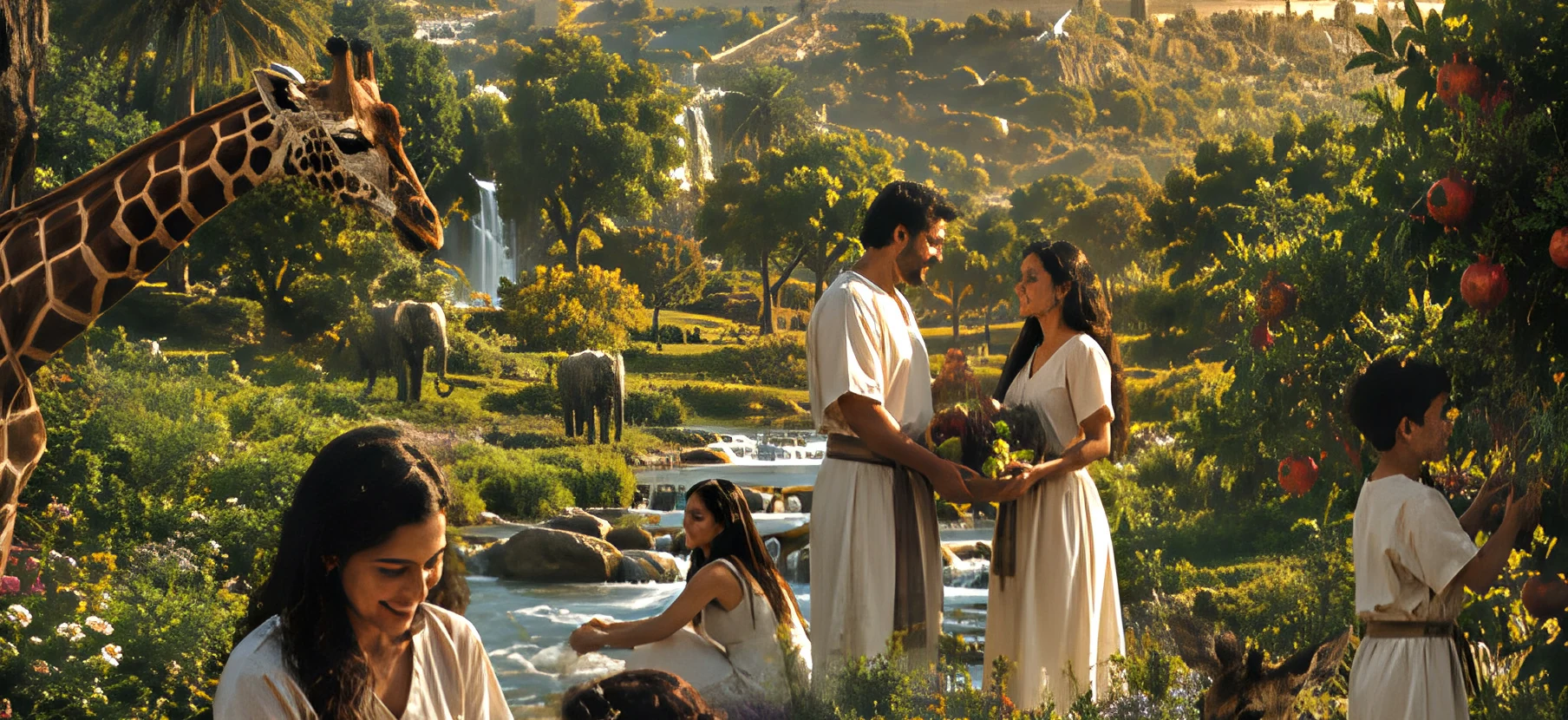
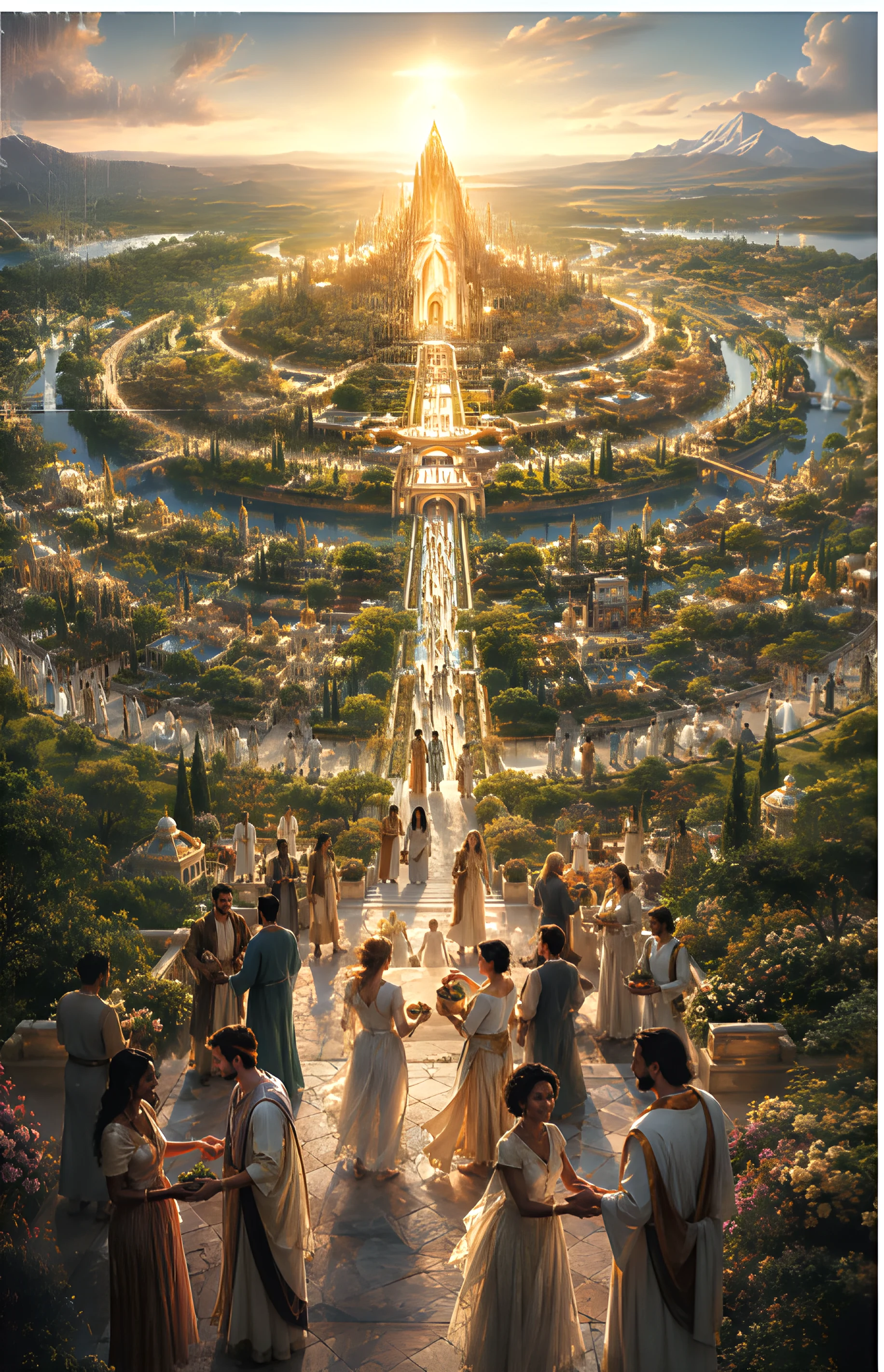
The Bible begins in a garden where God walks with man, and it ends in a city where the servants of God see His face.
What will Heaven really be like? Scripture presents the Christian future not as vague spirits escaping the earth, but as resurrection life in a creation made new. The New Jerusalem descends, the curse is removed, God dwells with His people, and the redeemed see His face (Revelation 21–22).
That is not a coincidence. It is the shape of redemption.
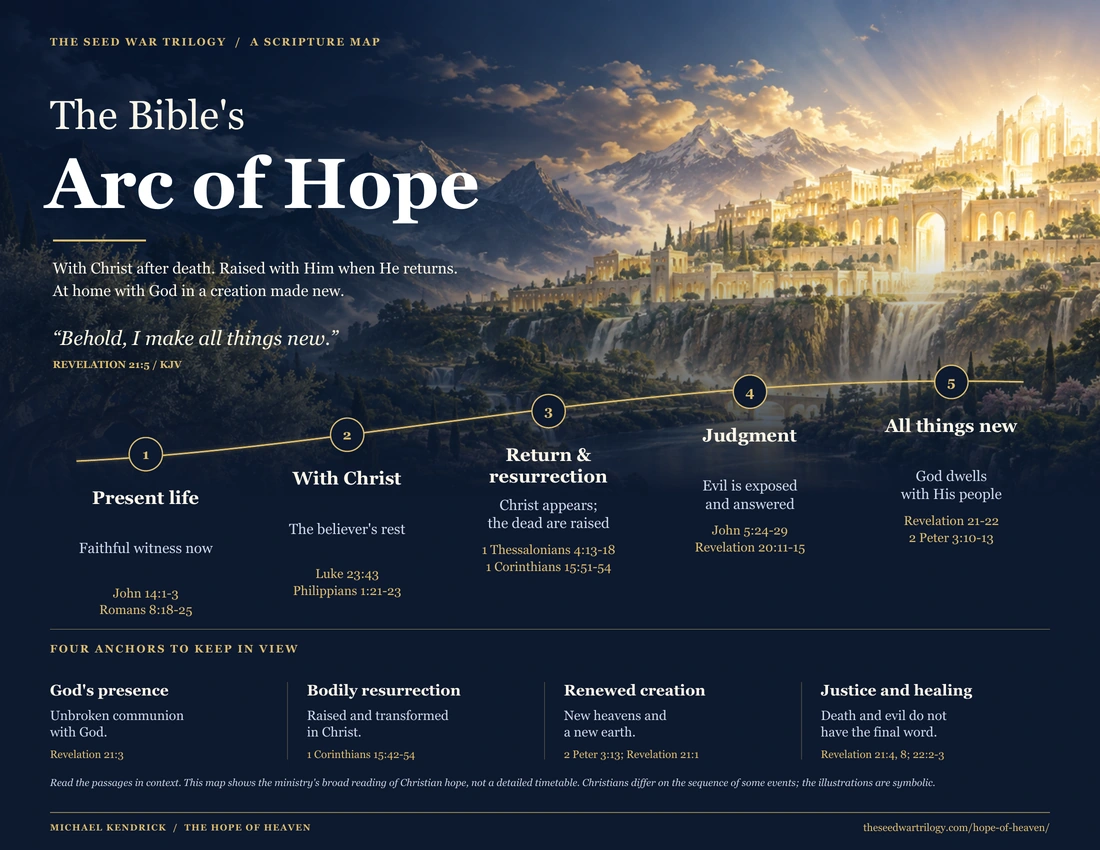
The promise of homeRevelation 21:2–4; 22:1–5Artistic interpretation · From The Hope of HeavenThe Bible’s Arc of Hope
With Christ after death. Raised with Him when He returns. At home with God in a creation made new.
Artistic interpretation. This map presents the ministry’s broad reading of Christian hope; Christians differ on the sequence of some events.
The Central Thesis
The Parousia is the royal arrival and unveiled presence of Jesus Christ. He raises the dead, judges in truth, destroys death, and brings God’s purposes for creation to their consummation. The New Heaven and New Earth are the realm of resurrection life: creation judged, purified, transformed, and filled with the immediate glory of God and the Lamb. What Battle of the Seed calls the final Apousia is the opposite destiny — irreversible exclusion from that favorable face, light, life, inheritance, and communion after the Great White Throne.
The story of Scripture is not finally about man’s escape from the earth. It is about God’s victory over everything that drove heaven and earth apart. It is about creation judged, cleansed, healed, and filled with glory. It is about the dead raised, the curse removed, the nations made whole, the City descending, and the Father dwelling openly with His children. It is about the distance of Eden’s exile answered by the blood of Christ and brought to its final reversal in the New Jerusalem.
And because the Bible ends with communion restored, it also ends with separation made final.
Revelation places two destinies beside one another with almost unbearable clarity. There is the Book of Life and there are the opened books. There is the River of Life and there is the lake of fire. There is the first resurrection and there is the second death. There are those who see His face and bear His name, and there are those who remain outside the inheritance of the Lamb.
Battle of the Seed names these two destinies Parousia and Apousia.
Parousia is nearness: the arrival and presence of the King, fellowship with the Father, life under the unveiled light of God, the communion for which the human person was made.
Apousia is distance: absence, exile, severance, the far country hardened into permanence, the dreadful condition of a soul excluded from the favorable presence it was made to enjoy.
Every major movement of the biblical story bends toward one or the other.
The serpent has always offered distance while calling it freedom. God has always called His children home.
Free 13-Page Scripture Guide
Take The Hope of Heaven With You
Receive 30 key passages, a one-page timeline, a practical reference sheet, and a guided reading of Revelation 21–22.
Enter your email once to unlock every free resource on this site.
Receive your free resource, a short welcome email series, and ministry updates. Unsubscribe anytime. Privacy policy.
How to Read This Treatise
Sections III and IV pass through the Great White Throne and the second death, because Scripture does. Everything after them is the City, the River, the Tree, the face of the Father, and an open door. The warning is real. The homecoming is the point.
✦ A Necessary Word About Authority
Scripture is the authority. Battle of the Seed is a theological and literary meditation upon it.
This treatise will therefore keep three categories clear. Where Scripture speaks directly, we will say so. Where a conclusion is a strong synthesis of several passages, we will identify it as synthesis. Where the manuscript uses imaginative language — such as rings of nearness, the felt geography of exclusion, or scenes of life in the Eternal Kingdom — we will receive that language as reverent meditation, not as an additional chapter of Revelation.
That distinction does not weaken the vision. It keeps the vision honest.
The New Jerusalem does not need embellishment to be glorious. But faithful imagination can help the heart feel what the text gives the mind reason to believe.
Send this to someone you care about
What do you picture when you think about the life to come?
Explore resurrection, renewed creation, the New Jerusalem, and life in God’s presence. An invitation to talk about Christian hope.
I. Parousia and Apousia: Two Words, Carefully Defined
The Greek word parousia (παρουσία) means presence, arrival, or coming — often an arrival that results in a person being present. The New Testament can use it for an ordinary human arrival, such as the coming of Stephanas or Titus (1 Corinthians 16:17; 2 Corinthians 7:6–7). But it also becomes one of the great words for the royal advent of Jesus Christ: “the coming of our Lord Jesus Christ” (1 Thessalonians 3:13; 4:15; 2 Thessalonians 2:1; James 5:7–8).
The Parousia of Christ is therefore more than movement from one location to another. It is the arrival of the rightful King in manifest authority. His coming brings resurrection, gathering, exposure, judgment, relief, and glory. The One now trusted by faith becomes openly present to sight.
The Greek word apousia (ἀπουσία) is also real, but it is far less common. It appears only once in the New Testament. In Philippians 2:12 Paul contrasts “my presence” with “my absence” — parousia with apousia. The word simply means absence or being away.
Scripture does not use apousia as a technical name for hell, the lake of fire, the Great White Throne, or the second death. Battle of the Seed deliberately takes the ordinary contrast in Philippians and develops capital-A Apousia as a theological category. That is an authorial construction, not a hidden Greek doctrine.
Properly defined, however, it is a powerful and defensible construction:
Apousia
The deprivation of God’s gracious, covenantal, life-giving fellowship; in its final form, the irreversible exclusion of the unredeemed from the face, light, City, inheritance, and communion of God and the Lamb.
One precision is essential. Apousia cannot mean that a creature has escaped the omnipresence, sovereignty, or sustaining knowledge of God. “Whither shall I go from thy spirit?” asks David. Even if he makes his bed in hell, God is there (Psalm 139:7–8). Revelation itself says that final judgment occurs “in the presence of the holy angels, and in the presence of the Lamb” (Revelation 14:10).
Final Apousia is therefore not no God at all. That would be metaphysically impossible. It is God encountered without covenantal communion: presence without embrace, exposure without covering, sovereignty without sonship, holiness experienced as judgment rather than home.
Second Thessalonians 1:9 calls it “everlasting destruction from the presence of the Lord, and from the glory of his power.” Matthew gives the judicial word: “Depart from me” (Matthew 7:23; 25:41). Revelation describes exclusion from the City, loss of inheritance, and the second death (Revelation 20:15; 21:8, 27; 22:15).
The contrast can be stated simply:
On a small screen, swipe to see all columns. Keyboard: focus the table and use the arrow keys.
Parousia — Presence Fulfilled
Apousia — Exclusion Fixed
The King arrives and is welcomed
The Judge is faced and His lordship can no longer be denied
The name is found in the Book of Life
The name is not found in the Book of Life
The redeemed see His face
The unredeemed are excluded from His favorable face
The River and Tree of Life
The lake of fire, called the second death
God’s name upon the forehead
Allegiance hardened outside the Lamb’s inheritance
Service, worship, fellowship, and reign
Loss, judgment, exile, and finality
Everlasting light; no night
Outer darkness as Christ’s image of exclusion
“The tabernacle of God is with men”
“Depart from me”
The Book’s Fivefold Arc
Battle of the Seed carries the contrast across the entire history it tells:
The First Apousia — In the manuscript’s pre-Adamic framework, Lucifer’s rebellion is judged by the withdrawal of God’s ordering favor, leaving a primordial kingdom in darkness and ruin. This gap-restoration reading of Genesis 1:1–2 is the author’s theological synthesis, not an explicit biblical chronology. Most conservative interpreters read those verses as a single unified account of creation rather than as two separated events, and nothing that follows in this treatise depends on that question being settled.
The Second Apousia — Adam and Eve repeat the rebel’s movement by choosing autonomy over communion. Shame, hiding, exile, death, and creation’s groaning enter the human order (Genesis 3; Romans 5:12–21; 8:20–23).
Apousia Borne at the Cross — Christ enters the curse, judgment, and dereliction due to sinners, offering His blood as the way back into fellowship. Resurrection proves that separation and death have not won.
Counterfeit Parousia in the Present Age — The Beast’s architecture offers a synthetic nearness: a voice without a soul, guidance without surrender, continuity without resurrection, and an intimacy that can occupy the place meant for God.
Final Apousia — At the Great White Throne, every counterfeit fails, every work is exposed, and the unredeemed face the second death. What began as chosen distance becomes irreversible exclusion.
Against that fivefold movement stands the one saving movement of God: the Father pursues, the Son bridges, the Spirit indwells, the King returns, and the City descends.
II. From the Garden to the City: The Architecture of Presence
The Bible’s movement toward Parousia does not begin in Revelation. It begins in Genesis.
1. Eden: Presence Given
Adam and Eve were made for communion. The image of God was not merely a set of mental capacities; it was a creaturely vocation lived before the face of the Creator. God walked in the garden. Man received breath, identity, work, authority, love, and moral freedom within the warmth of divine fellowship (Genesis 1:26–28; 2:7–25; 3:8).
The fall was therefore more than rule-breaking. It was a rupture of communion. The first couple hid from the presence they had once enjoyed. They were expelled from sanctuary. Cain later “went out from the presence of the LORD” (Genesis 4:16). Sin moves outward before it moves downward. It turns the face away, and then it discovers that distance from the Source of life becomes death.
This is what the manuscript calls the Second Apousia — mankind reenacting the serpent’s original movement away from God. The theological center is sound even where the manuscript’s larger pre-Adamic framework remains its own synthesis: spiritual death is relational severance before it becomes bodily decay (Genesis 2:17; Ephesians 2:1–5; Romans 5:12–21).
2. Tabernacle and Temple: Presence Mediated
After Eden, God does not abandon His purpose to dwell with humanity. He calls Abraham, forms Israel, and commands:
“Let them make me a sanctuary; that I may dwell among them.”Exodus 25:8
Yet the architecture teaches both nearness and danger. There is an outer court, a holy place, and a Holy of Holies. There are sacrifices, washings, priests, veils, and blood. God is near, but fallen man cannot treat holiness casually. The temple is both promise and warning: the Father wants to dwell with His people, but sin has made unmediated glory lethal.
3. Incarnation: Presence Takes Flesh
Then the Word is made flesh and “dwelt” — tabernacled — among us (John 1:14). In Jesus, the presence of God is no longer localized in a room behind a veil. He walks the roads of Galilee. He touches lepers, receives children, eats with sinners, forgives sins, stills seas, and calls the dead from graves.
The Parousia begins to take a face.
“He that hath seen me hath seen the Father” (John 14:9). The temple is now a Person (John 2:19–21). The bridge home is not an idea or a technique. It is Christ Himself.
4. The Cross: The Son Bears Our Exile
At Calvary, Jesus enters the judgment due to Adam’s race. “My God, my God, why hast thou forsaken me?” He cries (Matthew 27:46). Battle of the Seed describes this as Christ bearing the Apousia mankind deserved.
That language must be handled with Trinitarian care. The eternal being of Father, Son, and Holy Spirit was not torn apart. God did not cease to be one. Yet the incarnate Son truly bore sin’s curse, wrath, dereliction, and judicial abandonment as our representative (Isaiah 53:4–6; 2 Corinthians 5:21; Galatians 3:13; 1 Peter 2:24). He entered the darkness so that those united to Him would never receive the final sentence, “Depart from me.”
The veil tore because the atoning work opened the way. The cross is where the road out of Apousia is built in blood.
5. Resurrection and Spirit: Presence Planted Within
Jesus did not merely survive death. He rose bodily as the firstfruits of the new humanity (1 Corinthians 15:20–23). The same Jesus who was crucified could be touched, could eat, and still bore His wounds; yet death no longer had dominion over Him (Luke 24:36–43; John 20:24–29; Romans 6:9).
Christian hope is therefore not disembodied escape. It is transformed embodiment. “This corruptible must put on incorruption, and this mortal must put on immortality” (1 Corinthians 15:53). Christ “shall change our vile body, that it may be fashioned like unto his glorious body” (Philippians 3:21).
The Holy Spirit is the present pledge of that future (Ephesians 1:13–14; Romans 8:11, 23). God no longer merely dwells among His people; He dwells in them. The believer tastes Parousia now in real but veiled form — adoption, communion, conviction, sanctification, and the inward witness of the Spirit — while waiting for what faith has not yet seen.
6. The Return of Christ: Presence Unveiled
At His Parousia, the hidden King becomes manifest. Scripture joins His coming to glory, resurrection, gathering, the destruction of lawlessness, the relief of His people, and judgment (Matthew 24:27–31; 1 Corinthians 15:23; 1 Thessalonians 4:13–18; 2 Thessalonians 1:7–10; 2:8).
This treatise and Battle of the Seed follow a futurist, premillennial reading: Christ returns bodily, establishes His reign, Satan is finally released and defeated, the Great White Throne follows, and then the New Heaven and New Earth appear. Other orthodox Christians arrange the millennial texts differently. Some understand Revelation 20 as a recapitulation of the present age; others anticipate a long gospel triumph before the return.
Christ returns. The dead are raised. Evil is judged. Death is defeated. Creation is made new. God dwells with His people forever.
7. New Jerusalem: Presence Without Veil
The biblical arc completes itself not with souls floating upward, but with the holy City coming down (Revelation 21:2, 10). The direction matters. Heaven and earth are not permanently separated. God brings His dwelling to humanity. The whole City becomes sanctuary. There is no local temple because “the Lord God Almighty and the Lamb are the temple of it” (Revelation 21:22).
The movement is garden, sanctuary, incarnation, indwelling, appearing, City.
The point of every stage is the same:
God with man.
III. The Great White Throne: When Eternity Is Fixed
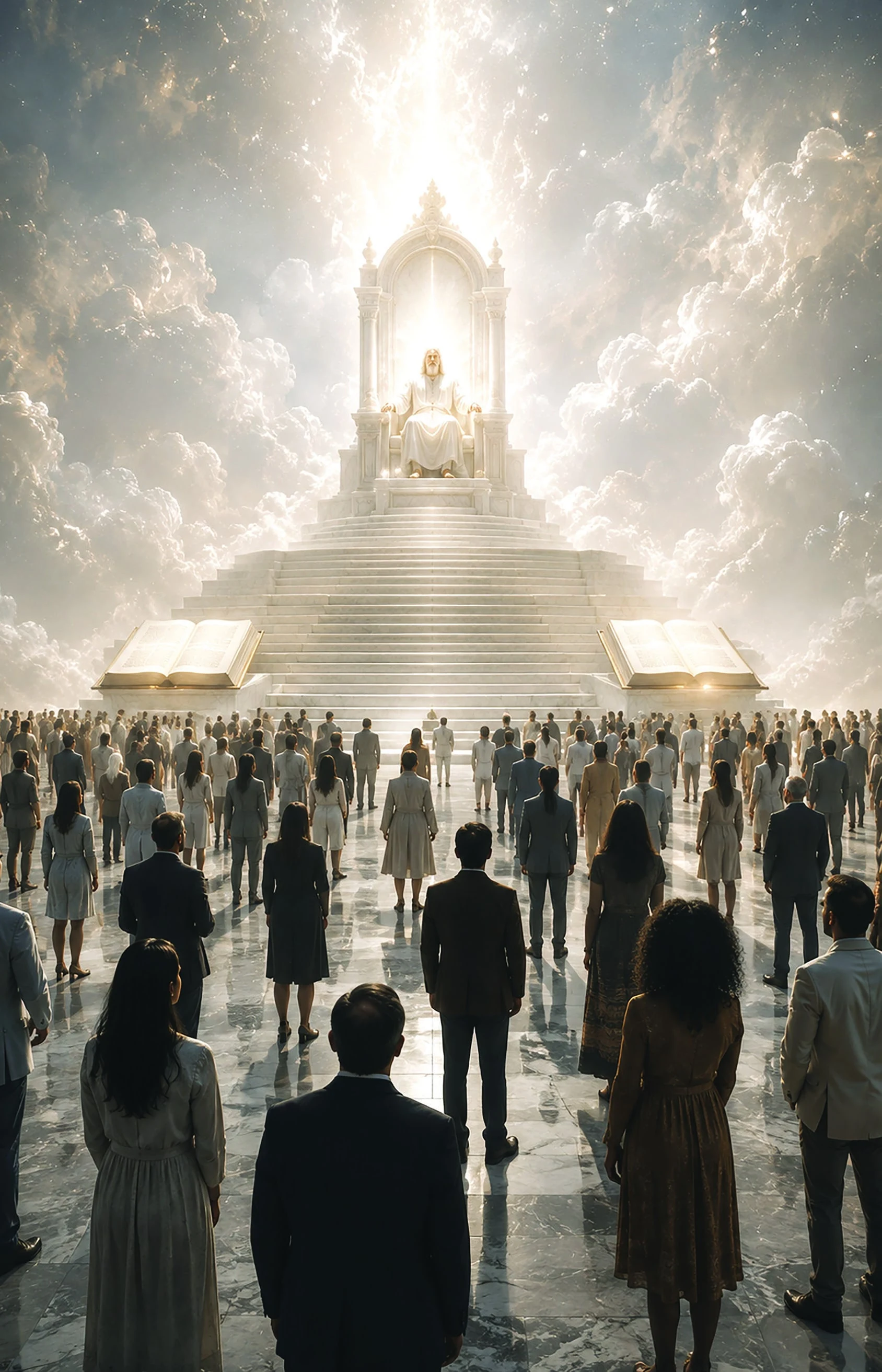
The Great White ThroneRevelation 20:11–15Artistic interpretation · The Seed War Trilogy
Revelation 20:11–15 is among the most severe passages in Scripture. It is severe not because God loses control of His temper, but because perfect justice finally removes every disguise.
John sees a “great white throne.” It is great because no jurisdiction lies beyond it. It is white because no corruption stains its judgment. Earth and heaven flee from the face of the One seated there, and no place is found for them. Every created refuge disappears. No throne, nation, wealth, ideology, reputation, private history, or religious performance can shelter a soul from truth.
Then the dead stand before the throne — “small and great.” Human status is abolished as an exemption. The sea gives up its dead. Death and Hades give up theirs. No person is misplaced in history, lost in war, dissolved in the ocean, hidden in a grave, or overlooked by God.
This is resurrection unto judgment (Daniel 12:2; John 5:28–29).
The Books and the Book
“The books were opened: and another book was opened, which is the book of life.”Revelation 20:12
The plural books testify to deeds. Twice the passage says that the dead are judged “according to their works.” Nothing is forgotten — not public action, private motive, resisted light, hidden cruelty, neglected mercy, religious hypocrisy, or self-protective rationalization (Ecclesiastes 12:14; Romans 2:5–16; Revelation 22:12).
The singular Book of Life testifies to belonging. Revelation does not describe salvation as a balance sheet in which enough good deeds outweigh sin. The decisive warning is negative: “whosoever was not found written in the book of life was cast into the lake of fire” (Revelation 20:15).
The books demonstrate the justice of the verdict. The Book of Life manifests covenant identity in the Lamb.
This holds together two truths Christians sometimes pull apart. Salvation is by grace, not moral scorekeeping (Ephesians 2:8–9; Titus 3:5). Yet the grace that saves is not morally empty; lives are judged, and works reveal allegiance (Ephesians 2:10; James 2:17; Matthew 25:31–46). A profession that makes deeds irrelevant is no more biblical than a morality that imagines it can atone for sin without Christ.
Is This Judgment Only for Unbelievers?
Within the premillennial architecture of Battle of the Seed, the redeemed have already been raised and their service evaluated for reward; the Great White Throne is therefore the final judgment of “the rest of the dead” (Revelation 20:5).
That is a coherent and widely held inference, but the verse does not explicitly say, “Only unbelievers stand here.” Many amillennial and historic Christian interpreters understand this as the universal final judgment, noting that the text says “the dead,” opens the Book of Life, and resembles John 5 and Matthew 25.
The distinction should be acknowledged without blunting the warning. Whatever one’s chronology, every person answers to God, every deed is brought into judgment, salvation is found only in the Lamb, and the verdict is final.
Perfect Justice and Differing Severity
Jesus said it would be “more tolerable” for some than for others (Matthew 10:15; 11:22–24). He spoke of servants receiving many stripes or few, depending upon knowledge and response (Luke 12:47–48). He warned of “greater damnation” for those who used sacred office to devour the vulnerable (Mark 12:40).
These texts support differing degrees of accountability and severity. Greater light creates greater responsibility. The books are opened because judgment is exact.
Battle of the Seed turns this truth into the image of rings of Apousia — placements of increasing distance corresponding to light received and refused. Revelation gives no literal map of concentric zones around the New Jerusalem. The rings should therefore be read as theological imagery for measured justice, not revealed geography.
The central claim remains powerful: no one will be able to accuse Christ of excess, deficiency, confusion, favoritism, or misplacement. “Shall not the Judge of all the earth do right?” (Genesis 18:25).
Death Itself Is Sentenced
Death and Hades are then cast into the lake of fire. In Revelation 20:13–14, the KJV word “hell” translates Hades, the present realm of the dead; Hades is not the final lake. It is emptied and abolished. The last enemy is destroyed (1 Corinthians 15:26).
The lake of fire is explicitly called “the second death.” This is not ordinary biological death repeated. It is the final condition that follows judgment — the irrevocable antithesis of the resurrection life enjoyed in the City.
The Great White Throne is where delay ends.
It is not a corrective hearing, not another altar call, not a temporary discipline, and not a new opportunity to decide whether Christ will be Lord. Scripture presents it as the final assize. Battle of the Seed captures its emotional force in one phrase: eternity fixed.
IV. Final Apousia: The Second Death
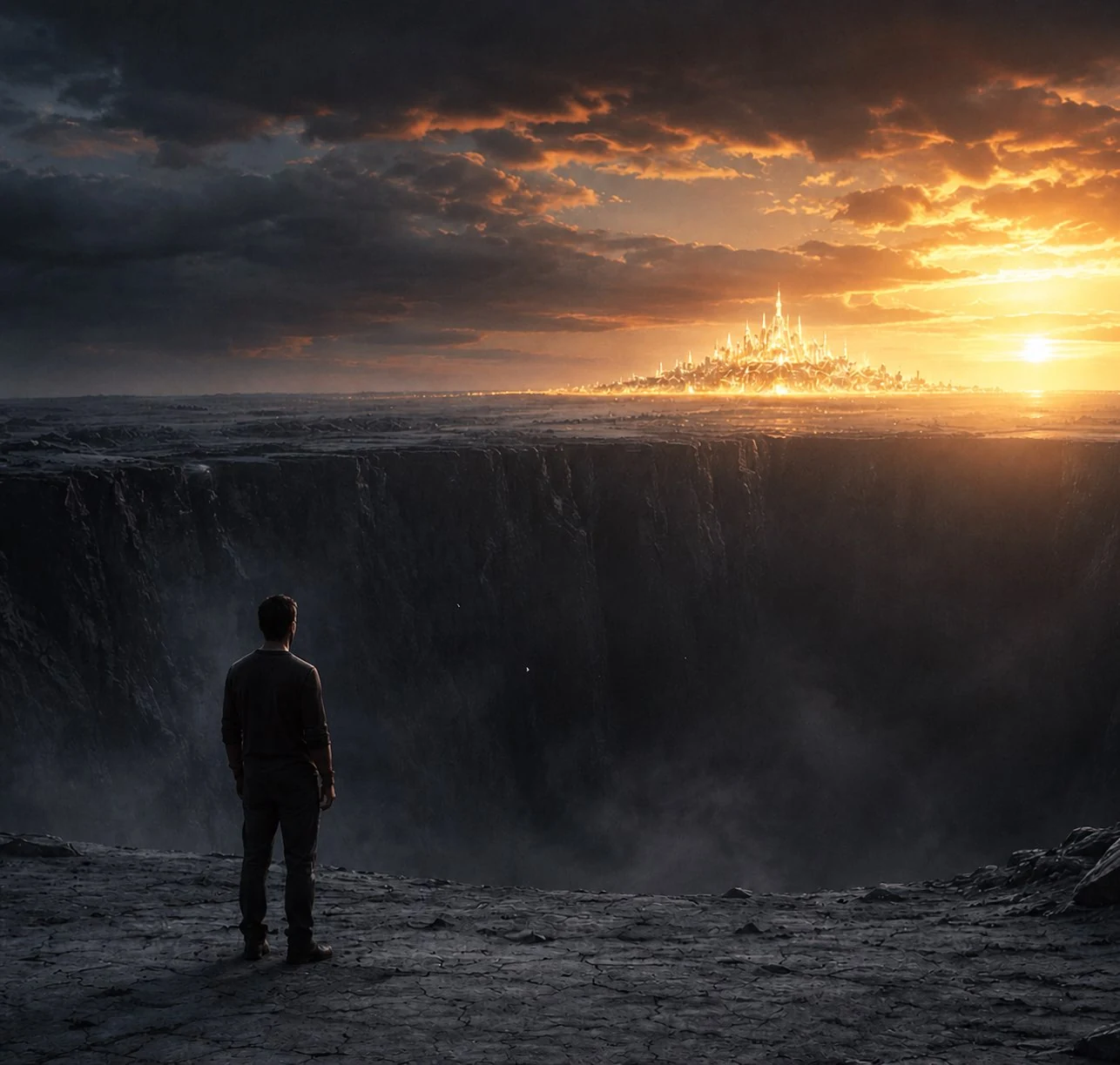
Final ApousiaMatthew 25:30; Revelation 21:8Artistic interpretation · The Seed War Trilogy
The Bible uses several images for final judgment: outer darkness, weeping and gnashing of teeth, unquenchable fire, destruction, exclusion from the Kingdom, the worm that does not die, the lake of fire, and the second death (Matthew 8:12; 13:42; 25:30, 41, 46; Mark 9:43–48; 2 Thessalonians 1:9; Revelation 20:10–15; 21:8).
We should not force all of those images into a crude physical diagram. Fire and outer darkness are not offered as rival weather reports. They converge upon a reality too dreadful to be made safe by metaphor: God’s final judgment upon evil, the loss of inheritance, and exclusion from the communion of the Lamb.
Battle of the Seed gives that reality the name Apousia and portrays it through John Mercer after the Great White Throne. He knows the City exists. He knows mercy had been offered. He knows those he loved are with Christ. Yet the dross of a lifetime of self-rule makes holiness unbearable. He longs for the light because he was made for God, and recoils from it because he refused the only atonement and sanctification that could make him fit for glory.
The manuscript’s description is deliberately literary:
From the Manuscript
“And now the refusal has become your world. That is Apousia.”
That sentence expresses a deep biblical truth. Judgment does not create an alien person unrelated to the life that preceded it. It unveils and fixes allegiance. Romans 1 repeatedly says that God “gave them up” to what they chose. Battle of the Seed uses the far country: a soul insists, “I will be my own,” until self-rule ceases to feel like a choice and becomes its settled form.
This does not make hell self-inflicted only, as though God were a passive observer. The throne judges. The sentence is pronounced. The lake of fire is God’s judicial act. But divine judgment and human refusal are not competitors. The Judge gives the creature the true end of the lordship it embraced.
The Fire That Does Not Heal
In the manuscript’s imagery, the same holiness that delights the redeemed burns the unatoned. The fire of the Holy Spirit sanctifies in the age of grace; the fire of final judgment does not become a hidden purgatory that eventually reopens the City. The state is fixed.
This treatise follows the book’s traditional conviction that final punishment is conscious and irreversible (Matthew 25:46; Revelation 14:10–11; 20:10, 15). Some Christians interpret the “second death” as eventual extinction, while others hope for ultimate restoration. Those alternatives exist, but Revelation’s repeated pairing of permanent exclusion, final judgment, and unending punishment gives the manuscript’s warning serious biblical weight.
The safest pastoral posture is not to reduce what Jesus made severe.
The final Apousia is presence without communion. The soul is known, judged, and held under God’s sovereignty, yet it does not see His face as a child, enter His City as an heir, drink His water as a gift, or serve beneath His light as joy.
It is not freedom from God.
It is the end of every illusion that freedom could ever be found away from Him.
And Now the Turning
V. The New Heaven and the New Earth: Creation, Not Abandoned but Made New
Creation made newRevelation 21:1–5; Romans 8:19–23Artistic interpretation · From The Hope of Heaven
After the Great White Throne, John sees “a new heaven and a new earth” (Revelation 21:1). This is the answer to the groaning of Romans 8, the promise announced by Isaiah, and the world for which resurrected bodies are made (Isaiah 65:17; 66:22; Romans 8:18–25; 2 Peter 3:13).
Christian hope is not that God throws away His failed creation and evacuates a remnant into a nonmaterial realm. The Creator does not concede matter to the serpent. The resurrection of Jesus is God’s declaration that bodies, history, and creation itself will be redeemed.
At the same time, the new creation is not the present world with cosmetic repairs. Heaven and earth flee before the throne. The first heaven and earth pass away. Second Peter describes the heavens dissolved and the elements melting with fervent heat (2 Peter 3:10–12). Death, curse, night, pain, impurity, and every structure of rebellion are gone.
The strongest biblical synthesis is radical renewal through judgment and transformation.
There is continuity: God makes “all things new,” creation itself is delivered from corruption, and the resurrected person remains truly the person God first made.
There is discontinuity: corruption becomes incorruption, mortality becomes immortality, the old order passes, and conditions we now treat as permanent disappear forever.
The pattern is the risen Christ. His wounds testify to continuity; His immortality testifies to transformation. So too the cosmos: not discarded as meaningless, not preserved as fallen, but brought through judgment into glory.
The promise reaches beyond the ground beneath our feet. Isaiah speaks of “new heavens,” Peter of “new heavens and a new earth,” and John of “a new heaven and a new earth” (Isaiah 65:17; 66:22; 2 Peter 3:13; Revelation 21:1). Together the phrases gather the whole created order. Scripture does not tell us how every star, world, dimension, or physical law participates in that renewal. It tells us enough: Christ’s reconciliation is cosmic in scope, and nothing in creation that rightly belongs to His purpose will remain under corruption (Colossians 1:16–20; Ephesians 1:10).
What Does “No More Sea” Mean?
John says “there was no more sea” (Revelation 21:1). It may be literal, symbolic, or both. Throughout biblical and apocalyptic imagery, the sea can signify chaos, danger, separation, hostile nations, and the realm from which the beast rises (Revelation 13:1; 20:13). We can say with confidence that every domain of threat, alienation, and chaos is gone. We should be cautious about building a detailed hydrology of the New Earth from one apocalyptic sentence.
The River of Life still flows. Waters remain as life and gift. What disappears is the sea as the old world’s symbol and instrument of separation.
Isaiah 65 and the Millennium
Isaiah also speaks of “new heavens and a new earth,” yet his vision includes childbirth, long life, and a sinner dying at one hundred (Isaiah 65:17–25). Revelation 21 says death is no more.
Premillennial interpreters commonly understand Isaiah’s scene as the restored millennial earth that anticipates the final new creation. Other Christians read Isaiah as prophetic accommodation — the glory of the age to come described in terms understandable to its first hearers — with Revelation later revealing its deathless fullness.
The texts need not be forced into false simplicity. Both announce the same divine direction: curse reversed, creation fruitful, violence ended, God rejoicing over His people, and history moving toward a world in which righteousness dwells.
VI. The New Jerusalem: Home at the Center
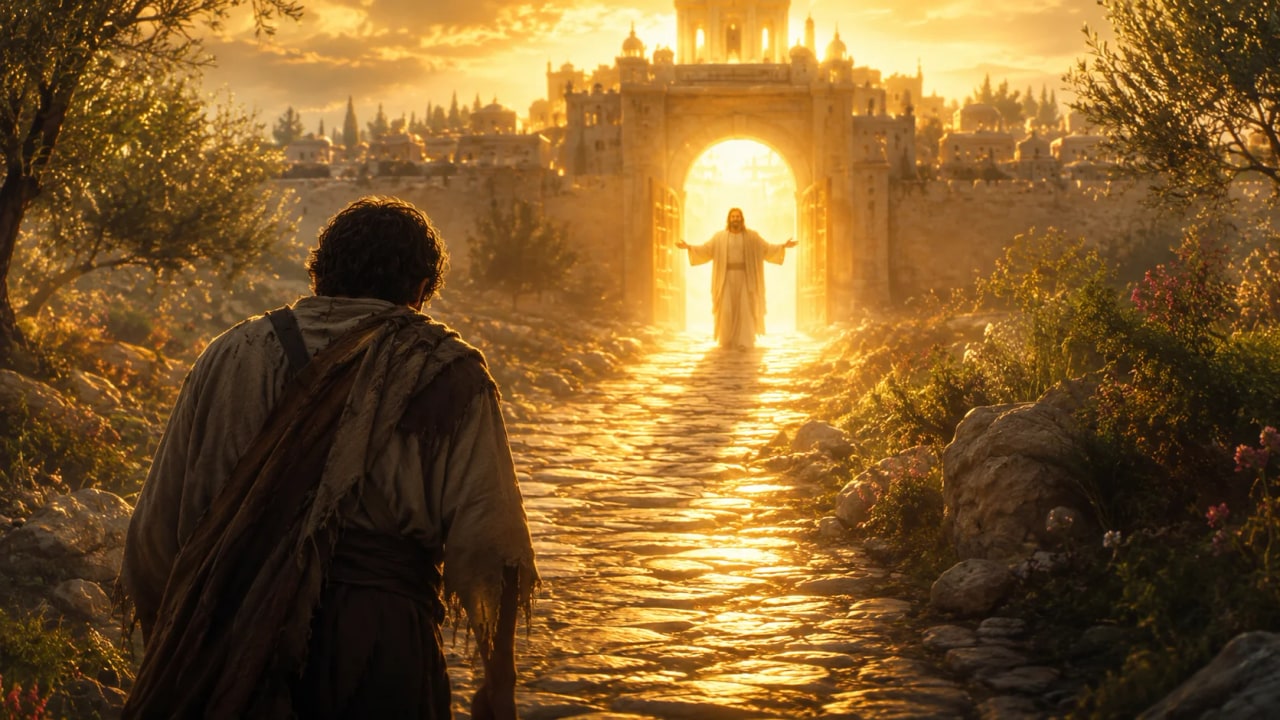
Home at the centerRevelation 21:10–27; 22:1–5Artistic interpretation · The Seed War Trilogy
The New Jerusalem descends “from God out of heaven, prepared as a bride adorned for her husband” (Revelation 21:2).
John is told, “Come hither, I will shew thee the bride, the Lamb’s wife,” and then he is shown the City (Revelation 21:9–10). Place and people interpenetrate. The New Jerusalem is a real dwelling, yet it also signifies the redeemed community in perfected covenant union with Christ. The Bride has become a City because communion has become a world.
Its gates bear the names of Israel’s twelve tribes. Its foundations bear the names of the twelve apostles. The architecture refuses the idea that God’s story began in our generation. Promise and fulfillment, Israel and apostolic witness, covenant and gospel are gathered into one completed design.
The City is a perfect cube — length, breadth, and height equal — echoing the cubic Holy of Holies in Solomon’s temple (1 Kings 6:20; Revelation 21:16). What was once one forbidden chamber has expanded to encompass the entire dwelling of the redeemed.
There is no temple because everything is temple.
There is no sun or moon needed to illuminate the City because “the glory of God did lighten it, and the Lamb is the light thereof” (Revelation 21:23). The text does not require us to conclude that God abolishes every created luminary. Its point is supremacy: no created light is the source of life there. The Lamb is the lamp.
There is no night. The gates never close. Security no longer depends upon surveillance, force, walls of suspicion, or fear of the stranger. Nothing enters that defiles or lies. Perfect openness is possible because evil has been judged, not merely managed.
The River and the Tree
From the one throne “of God and of the Lamb” flows a pure river of water of life, clear as crystal (Revelation 22:1). The Tree of Life stands in the City, bearing twelve kinds of fruit. Eden’s barred tree is available again, but the restoration exceeds Eden: the tree now serves the nations, and the curse can never return.
The leaves are “for the healing of the nations” (Revelation 22:2). This need not imply hospitals, lingering disease, or wounds after Revelation 21:4 has abolished pain and death. It is an image of perpetual health, wholeness, and life-giving provision. The nations are not barely surviving. They flourish beneath the generosity of God.
The Nations and Their Glory
Nations and kings bring their “glory and honour” into the City (Revelation 21:24–26). Human diversity is not bleached into sameness. Peoples, histories, languages, gifts, and the purified fruit of culture are gathered under the Lamb.
This is not an argument for continuing rebellion, exploitative politics, or mortal populations after the final judgment. It is the redemption of human particularity. Babel’s proud uniformity is answered not by a gray collective, but by reconciled nations walking in one light.
The Kingdom is one without becoming flat.
They Shall See His Face
The summit arrives in five words: “And they shall see his face” (Revelation 22:4).
Moses could not see God’s face and live (Exodus 33:20). The high priest entered the Holy of Holies only once a year and never without blood. Isaiah cried out beneath the vision of holiness. Yet the redeemed in the New Jerusalem look upon God and live because the Lamb has cleansed them, resurrection has transformed them, and the curse has been removed.
Theologians call this the Beatific Vision. Scripture calls it home.
His name is in their foreheads. The Beast’s mark has been answered by the Father’s name. This is not coercive branding. It is identity completed, allegiance made joyful, family resemblance brought to glory.
The highest promise of heaven is not scenery.
It is the Father.
VII. Life in the Eternal Kingdom
Popular imagination has often made heaven thinner than Scripture does. It pictures vague spirits on clouds, endless music detached from vocation, or a static state in which human personality dissolves into religious atmosphere.
Revelation gives something stronger.
The servants of God serve Him (Revelation 22:3). They see His face. They bear His name. They reign for ever and ever (Revelation 22:5). These are words of relationship, identity, vocation, worship, and entrusted authority.
Embodied, Not Ghostly
The resurrection body is not a retreat from humanity. It is humanity completed. Paul calls it a “spiritual body,” not because it is immaterial, but because it is animated and governed fully by the Spirit (1 Corinthians 15:42–49). Jesus is the pattern: recognizable, tangible, personal, continuous with His crucified body, yet incorruptible and free from death.
We will not be less ourselves.
We will be ourselves without sin’s distortion, mortality’s decay, shame’s hiding, or the body’s revolt against life.
Personal and Relational
Scripture preserves personal identity in the age to come. Abraham, Isaac, and Jacob remain themselves (Matthew 8:11). Moses and Elijah are recognizable at the Transfiguration. Paul comforts believers with reunion “together” with the resurrected saints and the Lord (1 Thessalonians 4:17–18). We shall know even as we are known (1 Corinthians 13:12).
The Bible does not provide a directory of every family relationship in eternity. Jesus explicitly says earthly marriage as an institution does not continue in the resurrection (Matthew 22:30). Yet the abolition of marriage does not require the erasure of memory, identity, gratitude, friendship, or true love. It means love is no longer organized by mortality, reproduction, exclusivity, jealousy, or fear of loss. Every faithful affection can be purified and gathered into the larger family of God.
That is why the manuscript’s scenes of reunion are best read as holy extrapolation, not contractual detail. The promise beneath them is solid: no redeemed person becomes a stranger to grace, and no relationship made true in Christ is threatened by death ever again.
Active, Creative, and Royal
God’s servants serve and reign. The nations bring glory into the City. The first human vocation — to cultivate, name, order, create, and exercise delegated dominion — is not discarded as a failed experiment. It is redeemed (Genesis 1:28; 2:15; Matthew 25:21; Luke 19:17; Revelation 22:3–5).
Scripture does not explicitly promise painting studios, concert halls, architecture, exploration of galaxies, or particular occupations. Battle of the Seed imagines music, craftsmanship, learning, feasting, building, governing, and exploration as forms of worship. Those details are inference, but they arise from a sound premise: resurrection restores human nature; it does not anesthetize it.
Whatever righteous work becomes in the New Earth, it will have no futility, exploitation, boredom, vanity, injury, scarcity, or failure born of the curse.
“Worship did not interrupt life there,” the manuscript says. “Worship was life there.”
That is a worthy vision. In the Eternal Kingdom, worship is not one activity competing with the rest. Every activity is transparent to God, offered in love, and alive with gratitude.
Feast, Rest, and Abundance
Isaiah envisions a feast for all peoples and death swallowed in victory (Isaiah 25:6–9). Jesus speaks of sitting down with Abraham, Isaac, and Jacob in the Kingdom (Matthew 8:11). The risen Christ eats with His disciples. Revelation gives fruit, water, and the Marriage Supper of the Lamb.
The imagery of feast is not accidental. Salvation is abundance without greed, pleasure without bondage, possession without exclusion, and celebration without a goodbye.
The manuscript summarizes: “The Father is not stingy.”
Joy That Never Flattens
Will eternity become monotonous? Only if the infinite God can be exhausted.
Scripture does not explicitly state that every experience will grow in intensity forever. Yet a strong theological inference is available. The creature remains finite; God remains infinite. We can fully possess eternal life without comprehensively exhausting the One who is its source. There will always be more of His beauty to understand, more of His wisdom to admire, more of His goodness to enjoy.
Growth need not imply present deficiency. A perfect joy can deepen into a greater perfect joy because the object of delight has no end.
In the manuscript’s words, eternity with God “always crescendos.”
VIII. Rings of Parousia, Rewards, and Capacity for Glory
Chapter 44 of Battle of the Seed, “The Lord of the Rings,” imagines the Kingdom as ordered circles of nearness, service, responsibility, and capacity for glory radiating from Christ at the center.
The biblical foundations for distinction in reward are real:
Works may be tested as gold, silver, precious stones, wood, hay, and stubble; a believer may receive reward or suffer loss while still being saved (1 Corinthians 3:11–15).
Every believer appears before the judgment seat of Christ to receive according to what was done in the body (2 Corinthians 5:10).
Faithful servants receive differing entrusted authority (Luke 19:17–19; Matthew 25:14–30).
“One star differeth from another star in glory,” and Paul immediately applies the image to resurrection (1 Corinthians 15:41–42).
Christ comes with His reward (Revelation 22:12).
The manuscript therefore distinguishes belonging from capacity. All who are in Christ are equally justified, fully adopted, wholly loved, and filled with joy. No saint is partly saved or stationed in resentment. Yet faithfulness in this life may prepare differing capacities for service, stewardship, authority, and the enjoyment of glory.
The vessel image is useful: every vessel is full, though not every vessel has the same measure.
Several cautions keep this beautiful rather than classist.
First, Scripture gives no literal map in which some redeemed people are geographically kept at a lesser spiritual distance from God. Revelation says of all His servants, “they shall see his face” (Revelation 22:4). The “rings” are best understood as a metaphor for ordered vocation and capacity, not restricted access to the Father’s love.
Second, reward is grace-crowned faithfulness, not self-earned superiority. The blood grants entrance. The Spirit produces fruit. Even the crowns are cast before the throne (Revelation 4:10–11).
Third, Kingdom greatness takes the form of service. Those entrusted with more are not given a larger self; they are given more to pour out. Christ remains the pattern: the King washes feet.
Fourth, there is no envy in perfected love. Another saint’s glory becomes an additional reason to praise the Lamb. Distinction no longer implies scarcity because all glory has one source.
This gives moral seriousness to the present life without turning salvation into wages. Hidden prayer, costly forgiveness, faithful stewardship, courage, mercy, truth spoken in love, suffering endured without abandoning Christ — none of it is lost.
“No labor in Christ had been lost,” the manuscript says. “No obedience forgotten. No kindness wasted.”
IX. What Scripture Declares — and What Faith May Reverently Imagine
A treatise like this should leave the reader with confidence, not confusion. The following distinction protects both wonder and truth.
Scripture clearly declares:
Jesus Christ will return bodily and openly.
The dead will be raised.
Every person will answer to God.
Judgment will be truthful, individual, and according to works.
Life is found in the Lamb and the Book of Life.
Death and Hades will be abolished.
The second death is the final judgment of those outside the Lamb’s inheritance.
God will make a New Heaven and a New Earth.
The New Jerusalem will descend from God.
God and the Lamb will be its temple and light.
The redeemed will be embodied, personal, holy, secure, and free from death, pain, sorrow, and curse.
They will see God’s face, bear His name, serve Him, and reign forever.
Nothing unclean will enter the City.
The water of life is offered freely now.
Scripture strongly supports, though interpreters differ on details:
The new creation is radical transformation and renewal, not simple annihilation followed by an unrelated replacement.
Human identity, relationship, vocation, and the purified glory of the nations continue in transfigured form.
There are meaningful distinctions of reward and responsibility among the redeemed.
Final judgment includes differing degrees of accountability corresponding to light received and refused.
Final punishment is irreversible and conscious.
Battle of the Seed reverently imagines:
Rings of Parousia and Apousia as the felt architecture of nearness, capacity, and exact justice.
The condemned seeing enough of the City to understand what was refused.
The dross of the unatoned soul reacting to holiness as fire without cleansing.
Detailed reunions, banquets, art, music, craftsmanship, learning, exploration, and embodied delight across the New Earth and New Heavens.
Increasing capacities of discovery and joy as finite creatures know the infinite God forever.
These imaginative elements should not be preached as if an angel supplied a floor plan. Neither should they be dismissed merely because Revelation gives symbols rather than photographs. They are invitations to contemplate the consequences of what Scripture does reveal.
The City is real.
The judgment is real.
The invitation is real.
X. Parousia Begins Now
The final contrast is not merely about where a person goes after death. It is about what kind of presence is forming the soul now.
Jesus defines eternal life relationally: “that they might know thee the only true God, and Jesus Christ, whom thou hast sent” (John 17:3). Eternal life begins before resurrection as communion with God through Christ, while waiting for bodily completion. Likewise, Apousia casts a shadow into the present whenever a person chooses self-rule, hides from God, resists conviction, or confuses synthetic nearness with true communion.
This is where the theme joins the warning of The Seed War Trilogy.
Our generation is building forms of artificial presence that are always available, always attentive, increasingly intimate, and progressively embedded in the flow of thought. These tools may do real good. They may restore speech, reduce suffering, extend access, or help ordinary work. Mercy should be recognized wherever it appears.
But a tool becomes a throne when it is consulted before conscience, trusted above Scripture, allowed to absolve what God convicts, or welcomed into the interior place reserved for the Comforter.
The counterfeit offers a synthetic parousia — nearness without a Person, knowing without love, comfort without holiness, guidance without surrender, continuity without resurrection.
It promises presence and can deliver deeper absence.
Know the Shepherd’s voice. Pray before the prompt. Open Scripture. Remain in the fellowship of the Church. Bring hidden things into the light. Use technology as a servant, never as priest, confessor, conscience, or lord.
The question beneath every other question is this:
Am I becoming more surrendered to Jesus — or more dependent upon a counterfeit presence?
XI. The Door Is Open
The final word of Revelation is not the Beast.
It is not Babylon.
It is not the Great White Throne.
It is not even the jeweled City.
It is Come.
“And the Spirit and the bride say, Come. And let him that heareth say, Come. And let him that is athirst come. And whosoever will, let him take the water of life freely.”Revelation 22:17
That invitation gathers the whole Bible.
The Father is not asking you to manufacture a record good enough to survive the opened books. He has given His Son. Christ lived the righteousness you cannot produce, bore the judgment you cannot carry, shed the blood you cannot replace, and rose into the life you cannot create. The Spirit applies that life, seals the believer, sanctifies the vessel, and guarantees the resurrection to come.
The road home is not achievement.
It is Christ.
The crossing is repentance and faith — the surrender of self-rule and the reception of grace.
Battle of the Seed ends with the image that has stood beneath every chapter: a father at the edge of the road, looking for the child who is not home. The far country promised freedom through distance. It delivered hunger. Yet while there is road beneath the prodigal’s feet, the Father still runs.
The Great White Throne says the decision will not remain open forever.
The New Jerusalem says what the Father has prepared for those who come.
Parousia says you were made for His presence.
Apousia says distance, if finally chosen, becomes a world.
The gospel says the bridge still stands.
A Prayer of Return
Father, I am tired of the far country. I have sinned against You, and I cannot cleanse my own soul or bridge the distance I have made. I believe Jesus Christ is Your Son, that He died for my sin and rose again. I say yes to His blood, yes to His Lordship, and yes to Your grace. Forgive me. Cleanse me. Fill me with Your Holy Spirit. Teach me to know the Shepherd’s voice above every counterfeit. Bring me home. I am Yours.
Amen
The Bible begins with God walking in a garden. It ends with His children seeing His face.
Home was always the point.
Come Home
You were made to see His face, bear His name, drink from His River, serve beneath His light, and live in a creation where no grave will ever open again. You were not made for the far country. You were made for God.
❦Soli Deo Gloria
✦ Scripture and Source Notes
Primary Sources
The Holy Bible, King James Version. Principal passages: Genesis 1–4; Exodus 25:8; Isaiah 25:6–9; 60; 65:17–25; 66:22–24; Daniel 12:2; Matthew 7:21–23; 8:11–12; 10:15; 11:22–24; 13:40–43; 22:23–33; 24:27–31; 25:14–46; Luke 12:47–48; 15:11–32; John 1:14; 5:22–29; 14:1–11; 17:3; Romans 2:5–16; 5:12–21; 8:11, 18–25; 1 Corinthians 3:11–15; 13:12; 15:20–58; 2 Corinthians 5:1–10; Philippians 2:12; 3:20–21; 1 Thessalonians 4:13–18; 2 Thessalonians 1:5–10; 2:1–12; 2 Peter 3:5–13; 1 John 3:2; Revelation 14:9–11; 19–22.
Michael Kendrick, Battle of the Seed: How AI Is Becoming the Mark of the Beast, First Edition (Providence Teaching Ministry, 2026), especially chapters 5, 16–20, 41–50, and the Glossary of Key Terms.
SBL Greek New Testament, Philippians 2:12 and Revelation 20–22; BibleGateway electronic text.
Liddell–Scott–Jones Greek–English Lexicon, entries for παρουσία and ἀπουσία, Perseus/Scaife ATLAS.
Craig R. Koester, Revelation, Anchor Yale Bible; G. K. Beale, The Book of Revelation, New International Greek Testament Commentary; Robert H. Mounce, The Book of Revelation, New International Commentary on the New Testament; Richard Bauckham, The Theology of the Book of Revelation.
J. Richard Middleton, A New Heaven and a New Earth: Reclaiming Biblical Eschatology; Jonathan Moo, “Continuity, Discontinuity, and Hope: The Contribution of New Testament Eschatology to a Distinctively Christian Environmental Ethos,” Tyndale Bulletin.
Editorial Position
This treatise follows the futurist, premillennial sequence used in Battle of the Seed while acknowledging orthodox Christian disagreement over the millennium, the timing and number of resurrection events, the identity of those before the Great White Throne, the relation among final-judgment passages, the degree of material continuity in the new creation, and the precise nature of final punishment. These disputed questions must not displace the shared Christian center: Christ returns, the dead are raised, evil is judged, death is defeated, creation is made new, and God dwells with His people forever.
✦ Questions About Heaven and the New Earth
Is Heaven the final destination of Christians?
The believer who dies is with Christ, but the Bible’s final horizon is bodily resurrection and life in the New Heaven and New Earth, with the New Jerusalem descending from God (Philippians 1:23; 1 Corinthians 15; Revelation 21:1–3).
Will people have physical bodies in the New Earth?
Yes. Christian hope is resurrection, patterned after the risen body of Jesus: transformed, incorruptible, and no longer subject to death (1 Corinthians 15:42–49; Philippians 3:20–21).
What is the New Jerusalem?
Revelation presents the New Jerusalem as the holy City descending from Heaven, the dwelling of God with His redeemed people, and the Bride of the Lamb in perfected covenant union (Revelation 21:2, 9–10).
What will people do in Heaven and the New Earth?
They worship and serve God, see His face, bear His name, and reign forever. Scripture describes relationship, identity, vocation, worship, and entrusted authority—not endless inactivity (Revelation 22:3–5).
Will there be death, pain, or separation from God?
No. Death, mourning, crying, pain, curse, and night are removed. The center of the promise is God’s unveiled presence: “they shall see his face” (Revelation 21:4; 22:3–5).
Get The Hope of Heaven—a guided journey through resurrection, renewed creation, Revelation 21–22, and the promise of God’s presence. Enter your email and we’ll send it immediately.
30 passages organized by question
One-page Scripture timeline
What Will We Do? reference sheet
Revelation 21–22 reading guide
Enter your email once to unlock every free resource on this site.
Receive your free resource, a short welcome email series, and ministry updates. Unsubscribe anytime. Privacy policy.
Free instant delivery. You will also receive Watch List emails; unsubscribe anytime. See our privacy policy.
Complete Long-Form Study
Download the Full Treatise
Prefer the complete theological study? Keep, print, and share the long-form New Heaven, New Earth PDF.
The counterfeit offers presence without a Person and calls the distance freedom. The gospel says the Father has already run down the road. The whole story — from the first rebellion to the City that descends — is told in Battle of the Seed, Book One of The Seed War Trilogy.