Neural Interface
The Interface Writes Back
One implant. Two jobs. Help a stroke patient move. Let a paralyzed person move a cursor with a thought. The FDA just put both on the same chip. This is not for sale.
By Michael Kendrick · August 31, 2026
If You Only Read This
- Same chip, two jobs: send a pulse to try to help a stroke, and read a thought to move a computer cursor.
- “Breakthrough” is a fast lane at the FDA. It is not a license to sell.
- Last week a different implant got a path toward phones. This week this one was asked to write signals back into the brain.
- Mercy is real. Three people in Seattle have it. It is still a trial.
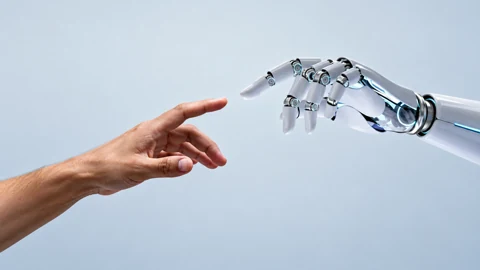
Last week the interface left the lab.
This week it was asked to write back.
One implant. Two jobs.
On August 31, a German company called CorTec said the U.S. Food and Drug Administration gave its Brain Interchange implant a second Breakthrough designation.
Job one, from April: help people recover movement after a stroke by sending tiny pulses into the surface of the brain.
Job two, this week: let someone who cannot move their arms or legs move a computer cursor with a thought—so they can type, click, and reach the digital world without a hand.
Same hardware. Two missions.
Read the brain to restore a cursor. Write to the brain to try to restore a limb.
This is not for sale.
The word Breakthrough sounds like a trophy. It is not.
It means the FDA will talk to the company faster. It does not mean you can buy this. It does not mean it is proven safe for everyone. CorTec says so itself. The device is still in trials.
Three people have it at the University of Washington in Seattle. The company says one of them already moved a computer with a thought—on the same implant put in for stroke rehab. That is a company report, not a finished study.
A new trial in the Netherlands is looking for one person with a spinal-cord injury.
Two Breakthroughs on one implant is still not a license to sell it.
It sits on the brain. It does not stab into it.
Think of two kinds of brain chips.
Last week’s chip—Paradromics, in The Interface Leaves the Lab—is a reader. Tiny wires go into the brain. It listens for the pattern of “I want to speak.” It does not zap the brain back.
This week’s chip sits on the surface. No wires into tissue, the company says. It can listen. It can also send a pulse. That is the new line: listen and talk back.
It is fully inside the body, wireless, and has no battery of its own. Power comes from outside, like some hearing implants.
A reader guesses what you mean. A writer acts on living tissue.
For a person who cannot move, a cursor is not a small thing.
If the mind is clear and the body will not obey, even a slow arrow on a screen can mean: ask for water. Text a child. Say yes. Say no.
If a stroke has stolen an arm, a pulse that helps the brain relearn a movement is a kind of mercy too.
Hold both. Do not turn either into a miracle story. Three people in Seattle. One seat open in the Dutch study. A company report that a first patient improved is a signal, not a cure.
People who cannot move deserve courage and honest expectations.
Who holds the off switch?
A machine that only reads can leak what you tried to say.
A machine that also writes can pulse the tissue that says it.
The hard questions are ordinary: who stores the brain data, who can turn the stimulation off, and who is still around in ten years to keep the implant working. The U.S. government has already warned those questions are not settled.
CorTec’s bigger idea is one implant for many diseases. Depression is on a future list. That is a roadmap, not a green light.
Last week, Paradromics opened a path toward phones. This week, CorTec asked the FDA to treat “talking to a computer” as a second job for hardware already allowed to stimulate. Help first. Platform second.
Watch who holds the key that turns stimulation on and off.
God promises restoration of movement and of speech. A machine may, under mercy, restore a cursor or a pulse. It does not own the leap. It does not own the tongue. It does not search the heart.
Do not worship the chip. Do not sneer at the person it helps.
The interface writes back.
Keep watch.
On a small screen, swipe to see all columns. Keyboard: focus the table and use the arrow keys.
| Date | The Threshold |
|---|---|
| Apr 2026 | First Breakthrough: stroke rehab (stimulate). |
| Jun 2026 | Paradromics: first long-term implant in a person. Wall record: A Second Key Turns in the Lock. |
| Aug 26, 2026 | Paradromics: path toward phones and laptops. Wall record: The Interface Leaves the Lab. |
| Aug 31, 2026 | CorTec: second Breakthrough—thought to cursor. Same implant. Three people in Seattle. Dutch study recruiting one. |
What Happened
August 31, 2026: CorTec says the FDA gave Brain Interchange a second Breakthrough for thought-driven cursor control, for people paralyzed in all four limbs.
April 2026: the same implant got Breakthrough for stroke rehab by pulsing the brain.
Breakthrough is a fast lane, not a product on a shelf. Still a trial. Not for sale.
Three people implanted in Seattle. CorTec says one already moved a cursor with a thought. Dutch study recruiting one person.
The chip sits on the brain (does not stab in), is wireless, has no onboard battery, and can both listen and pulse (company description).
Documentation
Primary records used for this Dispatch.
- CorTec — second Breakthrough, August 31, 2026
- CorTec — first Breakthrough for stroke rehabilitation, April 8, 2026
- ClinicalTrials.gov — INTENSE-BCI, NCT07640711
- FDA — Breakthrough Devices Program
- FDA — Cybersecurity in Medical Devices guidance
- U.S. GAO — brain-computer interfaces
- Related Wall: The Interface Leaves the Lab
- Related Wall: A Second Key Turns in the Lock
Last week this Wall covered a reader opening onto personal devices. This week: a writer. Same five days. Same body. Two jobs.
Soli Deo Gloria
✶Free Biblical Briefing
The Mark Will Not Look Like a Mark
Receive The Watchman’s Dossier—a focused guide to Revelation 13, AI, digital identity, programmable money, biometric control, and neural interfaces.
Enter your email once to unlock every free resource on this site.
Receive your free resource, a short welcome email series, and ministry updates. Unsubscribe anytime. Privacy policy.