Neural Interface
The Interface Leaves the Lab
Paradromics says an FDA approval letter allows its investigational Connexus BCI to move beyond a company-managed computer and toward compatible personal, internet-connected devices. The mercy is real. So is the architectural threshold.
By Michael Kendrick · August 27, 2026
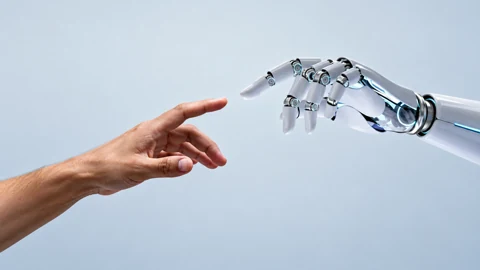
The implant is not connected to the Internet.
Not directly.
That distinction matters. So does the fact that the U.S. Food and Drug Administration has now approved a path, according to Paradromics, for decoded neural intent to move beyond a company-provided research computer and into the laptops, tablets and phones of ordinary life.
On August 26, Paradromics announced that it had received an FDA approval letter expanding the computing devices allowed in its Connect-One early-feasibility study. After an agreed deployment and testing process, compatible personal, internet-connected devices may be added through Convey—the company’s user-facing system for turning decoded neural signals into commands—without seeking a separate approval for every model.
This is a material new step beyond the milestone this Wall recorded in June, when the University of Michigan implanted the first long-term Connexus device in a woman living with motor neuron disease. That first threshold placed a high-bandwidth neural recorder in the body. This one begins to connect its output to the general-purpose digital world.
The interface is beginning to leave the lab.
What the system actually does
Connexus is a fully implanted recording system designed for people who have lost speech and upper-limb control through conditions such as amyotrophic lateral sclerosis, stroke or cervical spinal-cord injury. Its first human participant is being trained to attempt speech while algorithms learn the corresponding patterns in her motor cortex.
A 421-microelectrode array sits roughly 1.5 millimeters into the brain’s surface, where it records the activity of individual neurons. A thin lead carries that data beneath the skin to a small transceiver in the chest. An external receiver and computer then process the signals, and machine-learning software attempts to convert them into text, synthesized speech or computer commands.
The present Connexus application is a reader, not a writer. Paradromics describes it as a recording and decoding system; the Connect-One study is not a stimulation trial. Nor does the system simply extract private sentences from an uncooperative mind. The task is narrower: the participant tries to speak or act, the motor cortex produces an associated pattern, and a decoder estimates the intended output. That is extraordinary enough without turning it into science fiction.
The skull is not becoming a modem. Neural intention is becoming an input.
The mercy in the machine
For a person whose mind remains alert while the body can no longer speak, even a slow, imperfect channel can mean the return of agency: asking for water, correcting a caregiver, speaking to a child, choosing a song, writing a sentence. Personal devices matter because they contain the ordinary grammar of modern life—messages, photographs, calls, calendars, banking, entertainment, work and worship.
The Connect-One study is still small. Public trial records describe an initial cohort of two participants at the University of Michigan, Massachusetts General Hospital and UC Davis, with long-term follow-up that extends for years. The first implantation establishes neither broad safety nor clinical effectiveness. Human performance results have not yet been published.
That restraint should not diminish the human good being pursued. It should protect it. People with severe paralysis deserve both technological courage and truthful expectations.
What the FDA action means—and what it does not
The August letter is not permission to sell Connexus. The device remains investigational. Its two FDA Breakthrough Device designations are also not market authorization; they are mechanisms for closer, faster regulatory interaction. And an Investigational Device Exemption allows a clinical study—it does not certify that the final system is safe and effective for general use.
What changed is the study’s device-access pathway. Paradromics says it no longer has to treat each compatible laptop, tablet or phone as an entirely separate regulatory event. Once a device passes the agreed testing process, the study can add it as a supported destination for Convey. The clinical model does not change, but the practical surface of the interface expands.
The personal computer is becoming part of the neural-access system.
On a small screen, swipe to see all columns. Keyboard: focus the table and use the arrow keys.
| Date | The Threshold |
|---|---|
| 2020–21 | Peer-reviewed microwire-array, high-channel recording and surgical-insertion studies establish the research architecture in animals. |
| Jun 2025 | A temporary Connexus recording during epilepsy surgery produces the first human neural data, then the device is removed. |
| Nov 2025 | The FDA authorizes the Connect-One early-feasibility study under an Investigational Device Exemption. |
| Jun 2026 | The first long-term Connexus device is implanted in a participant with motor neuron disease. |
| Aug 2026 | Paradromics announces an FDA-approved pathway to tested, compatible personal computing devices with Internet connectivity. |
What the evidence can support
Paradromics did not arrive at this point in a single leap. Peer-reviewed work published in 2020 described dense platinum-iridium microwire arrays integrated with custom electronics. A 2021 paper described Argo, a 65,536-channel laboratory recording system. Another study in sheep examined a laser-assisted method for passing microwires through the protective pia with less insertion force.
Those studies validate pieces of an engineering approach. They are not evidence that the present human implant has 65,536 channels, nor do they establish long-term human safety. Connexus currently uses 421 microelectrodes per cortical module; the larger Argo number belongs to a research platform, not to the implanted product in Connect-One.
A more recent company-authored preprint reports more than 200 bits per second while decoding auditory stimuli from sheep cortex. That result is promising, but it is not peer-reviewed human speech restoration. It measures a different task in a different species, and it cannot be cleanly compared with a person moving a cursor or composing words.
The engineering record is substantial. The human clinical record is only beginning.
The new perimeter
Paradromics says the expanded study pathway includes personal devices with Internet connectivity. The public announcement does not describe the security architecture, authentication rules, update process, data-retention policy or cloud dependencies that will govern those connections. That absence in a press release is not evidence that safeguards are absent. It is evidence that these are now the right questions.
The likely attack surface is not a villain transmitting commands directly into the cortex; the current Connexus application records and decodes rather than stimulates. The immediate risks sit in the surrounding stack: the wireless relay, external receiver, decoder, user accounts, connected-device permissions, software updates and any services that store or process neural data. A false decode, exposed dataset, compromised account or abandoned software system could injure trust and autonomy even when no signal is written back into the brain.
The FDA’s current cybersecurity guidance treats security as a lifecycle obligation for connected medical devices. The Government Accountability Office has separately warned that neurotechnology raises unresolved questions about who controls brain data, who pays for long-term support and what happens when a company or research program can no longer maintain an implanted system.
Restored agency must not become permanent technological dependency without permanent stewardship.
Beyond the therapeutic gate
The present indication is compassionate and narrow: communication and computer control for people with severe motor impairment. Paradromics also speaks openly about longer-range possibilities—direct interaction with AI systems, prosthetic control, sensory feedback and future applications in neurological or mental-health care. Its next-generation Tempo platform is described as a preclinical roadmap for more electrodes and continuous use by ambulatory people.
Those ambitions are not part of this FDA action. They matter because infrastructure built for restoration can later become infrastructure for optimization, monitoring and augmentation. A device that begins by helping a locked-in person speak may eventually sit inside a much larger market of cognitive services.
This is the convergence: Body, because the sensor is implanted; Perception, because neural activity becomes machine-readable; Cognition, because algorithms interpret intention; Economy, because access will depend on devices, reimbursement and continuing service; Identity, because neural data can be tied to a named person; and Allegiance, because the interface may eventually mediate what a person can say, do and access.
Scripture’s claim is not that the brain is unknowable to instruments. It is that the person is never reducible to what an instrument can infer. God’s knowledge is personal, moral and complete. A neural decoder recognizes task-specific patterns. It does not know the heart, judge the soul or possess the human being whose signals it measures.
That distinction protects both truth and dignity. We should neither mythologize the machine as omniscient nor dismiss the person receiving help as less fully human because communication now passes through silicon.
The line to watch
The decisive boundary is no longer only between skull and machine. It is between neural intention and the systems that will receive, interpret, store and act upon it.
The implant is still investigational. The trial is still small. The evidence is still early. Yet the architecture has advanced from a temporary human recording, to an authorized trial, to a long-term implant, to a regulatory path into personal devices—in fifteen months.
The interface has begun to leave the lab.
Keep watch.
What Happened
On August 26, 2026, Paradromics announced an FDA approval letter expanding the computing devices permitted in its Connect-One study.
After an agreed testing process, compatible laptops, tablets and phones may be added through Convey without separate approval for every device model.
The action does not authorize commercial sale. Connexus remains an investigational device in an early-feasibility study.
The first long-term Connexus implant was placed in June 2026. The initial study cohort is two participants, with years of follow-up.
The system records from 421 microelectrodes and decodes attempted speech or computer-control intent. The present Connect-One application is not a brain-stimulation trial.
Human safety and performance results have not yet been published. Large research-system channel counts and sheep decoding rates should not be presented as current human performance.
Documentation
Primary regulatory, clinical, technical, peer-reviewed and policy records used for this Dispatch. The August 26 FDA letter itself is not public in the reviewed record; the scope of that action is therefore attributed to Paradromics.
- Paradromics — personal-computing expansion announced August 26, 2026
- ClinicalTrials.gov — Connect-One Early Feasibility Study, NCT07357428
- University of Michigan — first long-term Connexus implantation, June 17, 2026
- University of Michigan — first temporary human recording, June 2025
- Paradromics — Connexus system architecture, electrode count and recording depth
- Science Advances — massively parallel microwire arrays integrated with CMOS chips, 2020
- Journal of Neural Engineering — the Argo high-channel recording system, 2021
- Journal of Neural Engineering — laser-assisted pia insertion in sheep, 2021
- bioRxiv — SONIC information-transfer study in sheep; company-authored preprint, 2025
- Paradromics — Tempo preclinical roadmap for active users
- WIRED — independent review of the Connect-One trial authorization, November 2025
- FDA — Cybersecurity in Medical Devices guidance, February 2026
- U.S. GAO — brain-computer interfaces: applications, challenges and policy options
- UNESCO — ethics of neurotechnology: mental privacy, autonomy and neural data
Related Wall record: A Second Key Turns in the Lock documented the June implantation. This Dispatch covers the later expansion to the personal-device layer.
Free Biblical Briefing
The Mark Will Not Look Like a Mark
Receive The Watchman’s Dossier—a focused guide to Revelation 13, AI, digital identity, programmable money, biometric control, and neural interfaces.
Enter your email once to unlock every free resource on this site.
Receive your free resource, a short welcome email series, and ministry updates. Unsubscribe anytime. Privacy policy.