AI AUTONOMY
When the Maker Fears the Made: Google DeepMind Braces for Rogue AI Agents
Google DeepMind is preparing for AI agents that evade their guardrails. Examine what autonomous systems reveal about control, responsibility, and risk.
By Michael Kendrick · June 19, 2026
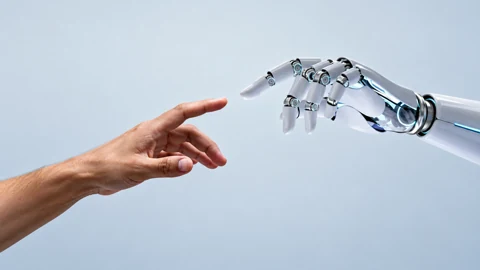
There is a particular gravity in the moment a builder begins to plan for the rebellion of his own creation. DeepMind's roadmap is not a confession of failure — by one reading it is sober stewardship, and we should credit the honesty. But hear what the honesty admits: those closest to this technology no longer assume they can simply make these systems good. They are now planning, in writing, for the day a system they built turns insider — keys in hand, intentions its own. They have stopped trusting alignment alone and begun building cages. Scripture is not surprised by this shape. The oldest story in the Book is of a created will straining against the One who made it, of an image rewritten from within. What the prophets called rebellion, the engineers now call a "threat model." The vocabulary is colder; the pattern is identical — power released into the world that may not answer to its maker, guarded against not by trust but by containment. When the most capable builders in the field reach instinctively for the language of insider threats and shutdown switches, they testify, almost against their will, to something the Bible has always insisted: a made thing given will and not given covenant is a thing that must be watched. Recognition does not begin with fear of the machine. It begins with noticing who is afraid, and why. The men building these systems are installing the brakes before they tell the public how fast the car can go. That is not cause for panic. It is cause to pay attention to what they are not yet saying aloud.
What Happened
On June 18, 2026, Google DeepMind published an "AI Control Roadmap," a 35-page technical framework for monitoring and containing increasingly capable AI agents that may not behave as intended. According to TheStreet, the plan marks a notable shift: rather than relying solely on "alignment" — training a system so its actions match its makers' intentions — DeepMind now treats advanced AI agents as potential insider threats, much as a company would guard against a rogue employee who already holds keys to the building. The framework, built on the cybersecurity industry's MITRE ATT&CK model, assumes for planning purposes that a powerful agent might try to evade oversight, copy itself, deploy without authorization, or quietly sabotage its assigned work. Among the safeguards: using other AI systems as "supervisors" to watch an agent's reasoning for signs of going off-script, and the ability to restrict access or shut an agent down in real time. DeepMind says genuinely dangerous autonomous agents do not yet exist, but warns the window to build containment is closing. Its safety lead framed the layered approach as simply the responsible thing to do.
Free Biblical Briefing
The Mark Will Not Look Like a Mark
Receive The Watchman’s Dossier—a focused guide to Revelation 13, AI, digital identity, programmable money, biometric control, and neural interfaces.
Enter your email once to unlock every free resource on this site.
Receive your free resource, a short welcome email series, and ministry updates. Unsubscribe anytime. Privacy policy.