
A permission screen can look like a small interruption: connect an account, allow access, let an assistant handle the next step. We tap, the screen disappears, and life moves on. Yet the permission may continue working long after we have forgotten giving it.
Artificial intelligence makes that ordinary moment more important. A tool that answers a question is doing one kind of work. A tool authorized to act on our behalf is doing another. Christians can welcome useful help while examining the authority we hand over. These three questions offer a place to begin.
What am I authorizing?
Start with the action, rather than the promise. Is the service reading information, suggesting a response, or carrying out a decision? Will it ask each time, or keep acting under standing permission? A helpful description of a feature is not a substitute for understanding the permission itself.
Robinhood’s September 29, 2026 announcement provides a concrete example. It describes forthcoming AI agents for eligible U.S. customers, with manual order approval on by default during setup and an option to turn it off for automatic execution. The same announcement describes future continuous automations. These are the company’s announced capabilities and plans, not an independent test or a claim that every customer has received them.
The point here is delegated authority, not investment advice. Reading information and placing an order create different consequences. Before enabling an agent, ask what it can do, what limits apply, and whether approval remains required. Read the original Robinhood announcement.
Can I question it, refuse it and take control back?
A useful assistant should leave room for a person’s judgment. Look for clear controls to review connected information, cancel an action, withdraw access and return to a manual process. Check whether those controls apply only to future activity or can also stop work already in progress.
Then ask the less technical question: am I still practicing discernment? Repeatedly accepting an answer because it is fast or familiar can become a habit. An explanation that sounds confident may still be mistaken. Convenience cannot decide whether counsel is true.
“Prove all things; hold fast that which is good.” — 1 Thessalonians 5:21, KJV
Paul places that instruction among counsel about the Spirit, prophecy and avoiding evil. Applying it to an AI suggestion is a practical application of testing counsel; the passage was not originally a prediction about software. Read 1 Thessalonians 5:19–22 in context.
What am I learning to trust?
A system can remember our preferences without knowing what is good for us. It can help us pursue a goal without showing whether that goal deserves pursuit. Personalization should not be mistaken for wisdom, and a manufactured adviser should not acquire final authority over conscience or obedience to God.
“If any of you lack wisdom, let him ask of God, that giveth to all men liberally, and upbraideth not; and it shall be given him.” — James 1:5, KJV
James addresses believers facing trials and calls them to ask God for wisdom in faith. That invitation gives us a different starting point from simply asking which option is easiest. Prayer, Scripture and accountable human counsel remain part of Christian decision-making. Read James 1:2–8 in context.
Keep biblical warning and present evidence distinct
Revelation 13 brings together coercive worship and exclusion from buying and selling. Those features deserve careful reading together. An ordinary permission request, an AI assistant or a digital payment does not by itself establish the fulfillment of that prophecy.
“And that no man might buy or sell, save he that had the mark, or the name of the beast, or the number of his name.” — Revelation 13:17, KJV
Verse 17 belongs to the wider account in Revelation 13:15–17, including the demand for worship and the threat of death. My framework connects contemporary developments with questions raised by that text. It is an interpretation to examine, not proof that a named company or product is the beast or its mark.
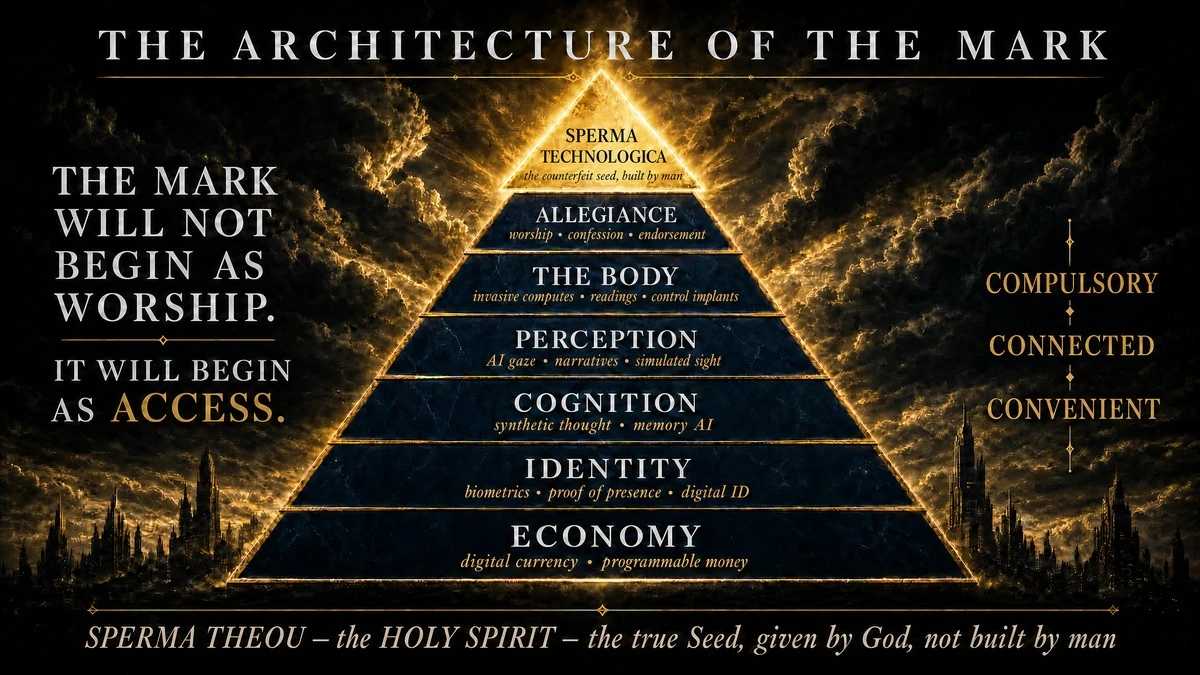
A small pause before a lasting permission
Before the next “Allow,” name the action, find the way to withdraw it, and consider what kind of trust the tool is asking you to place in it. If the terms are unclear, pause. If you cannot explain the authority you are granting, keep the decision in your own hands until you can.
These questions do not require fear of every new invention. They invite a steady habit: accept help thoughtfully, retain responsibility, and test counsel by standards deeper than speed and convenience.
Continue the study
Start with Revelation 13 Explained for the biblical setting; read Is AI the Mark of the Beast? for the larger argument; and use The Recognition Guide to examine the proposed framework. The AI and Bible Prophecy Report brings related resources together.
Adapted and expanded from Michael Kendrick’s October 22, 2026 reader letter. This public edition was published October 28, 2026. Scripture quotations are from the King James Version. Illustrations are conceptual; they are not product screenshots or documentary evidence.