The Mark of the Beast
Buy and Sell by Permission: Europe Builds the Rails for a Programmable Euro
A European Parliament committee has cleared the first gate for a central-bank digital currency. The reassurances are loud. The architecture is louder.
By Michael Kendrick · June 24, 2026
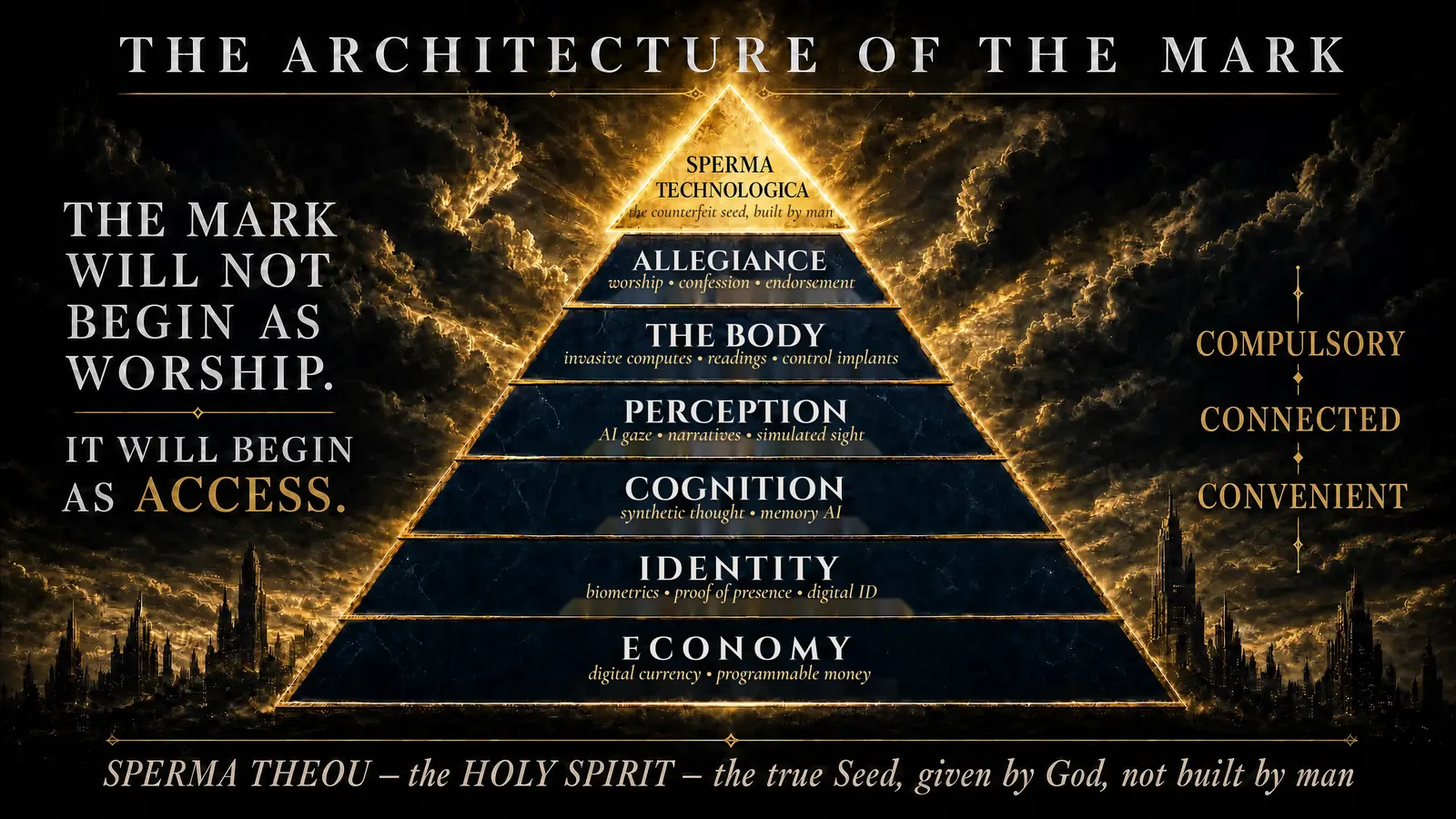
Strip away the language of "innovation" and "sovereignty," and what the committee approved is a blueprint for money that can be governed at the level of the individual transaction. Every unit would be a direct liability of the central bank, built so that rules can travel inside the money itself.
The officials are careful to soothe. The currency will "complement cash, never replace it," the lead lawmaker promised. Privacy will be protected, they say, through cryptographic techniques that verify a payment without exposing the payer. Cash, we are told, is not going anywhere.
Perhaps. But Scripture trained us to watch the architecture, not the assurances. In Revelation 13, the second beast causes all — small and great, rich and poor, free and slave — to receive a mark, so that no one may buy or sell who does not have it. The mechanism of that prophecy is not merely identification. It is permission: a world in which the ability to transact is granted and switched on, and can therefore be withheld and switched off.
A holding cap is permission. An expiry window is permission. A currency whose rules ride inside the coin is permission rendered programmable. None of these features needs to be turned against the faithful today for us to notice that the rails are being laid. Capacity precedes coercion. The watchman's task is to name the capacity while it is still being poured into the foundation.
Note, too, the divergence across the Atlantic. As Europe reaches for the tool, the United States, for now, sets it down. The Seed War has never been a single front.
Let us be precise, because credibility is the watchman's only currency. This is a committee vote, not a finished law. The privacy protections may prove real. Cash may well survive the decade. The year 2029 is far off, and much can change. We are not announcing the mark. We are reporting that the world is, calmly and by majority vote, learning to build the kind of money the mark would require.
Stay awake. Read the architecture. And remember that the One who holds all authority in heaven and on earth is not negotiating in any committee.
What Happened
On Tuesday, June 23, the European Parliament's Economic and Monetary Affairs (ECON) Committee voted 43 to 14, with one abstention, to approve the legal framework for a digital euro — a central-bank digital currency issued directly by the European Central Bank.
The vote is not final passage. It opens the last round of negotiations: a full Parliament vote is expected in July, followed by trilogue talks with the member states, with lawmakers aiming for finished legislation by year-end. A 12-month pilot is slated for 2027, and first issuance could come as early as 2029.
The currency would run in two forms — an online version processed through accounts, and an offline version stored on a device that works without internet. There would be a cap on how many digital euros a person may hold, and businesses would not be permitted to hold the currency longer than 24 hours. The same week, the U.S. Congress moved the opposite direction, advancing a measure to bar the Federal Reserve from issuing its own digital currency through 2030.
Free Biblical Briefing
The Mark Will Not Look Like a Mark
Receive The Watchman’s Dossier—a focused guide to Revelation 13, AI, digital identity, programmable money, biometric control, and neural interfaces.
Enter your email once to unlock every free resource on this site.
Receive your free resource, a short welcome email series, and ministry updates. Unsubscribe anytime. Privacy policy.