Visa
Has created payment “keys” that let an AI pay without seeing your real card number. Most uses still keep a person in the loop—for now. [2]
A DISPATCH FROM THE WALL · OCTOBER 1, 2026
Apps are learning to shop, pay and trade for you. That’s handy. But it raises a bigger question: who decides whether you’re allowed to buy at all?
IMAGINE THIS
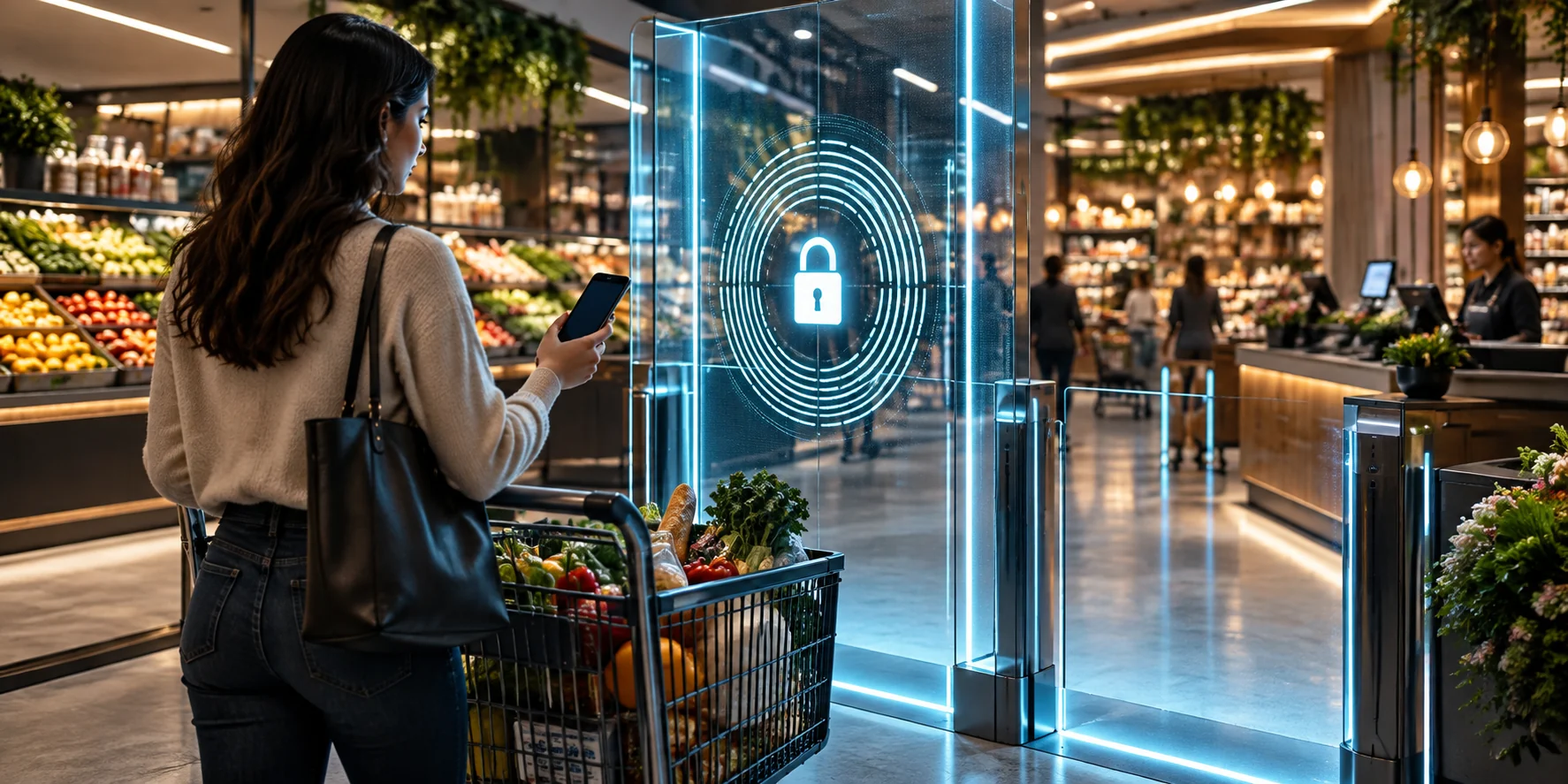
The grocery list is on the fridge. You tell your phone, “Order the usual, find school shoes under $50, and pay the electric bill.” By the time the coffee is ready, it’s done. No lines. No forms. No forgetting.
That convenience is arriving fast. Your phone already helps you decide what to buy. The next step is letting it buy for you.
Now imagine one more Monday. The order doesn’t go through. There’s money in the account. The screen just says: Not authorized.
That moment is what this Dispatch is about. When a machine can make the purchase for you, who has the power to say you can’t make it at all?
THE NEWS
On September 29, the investing app Robinhood announced AI “agents” built into its app. You give an agent instructions, and it can research investments and place trades for you. The company says more than 150,000 customers have already opened accounts for its earlier AI-trading service, which launched in May. The new in-app agents, and a feature called Loops for standing, repeating instructions, are “coming soon.” [1]
The agent works with money in a separate account. At first it asks your permission for each trade, but most customers can turn that off. (Crypto approvals must stay on in Connecticut, New York and California.) Robinhood’s fine print is clear: you assume all the risk for what the agent does. [1]
Put simply: you can give an AI a budget and a set of instructions, and it can buy and sell without checking with you each time.
That has real appeal. Research takes time, and money decisions can feel overwhelming. But a confident machine isn’t necessarily a wise one. The more you let it handle, the more its mistakes matter—and the more it matters who sets its limits, whether you can stop it, and who can unlock your account if something goes wrong.
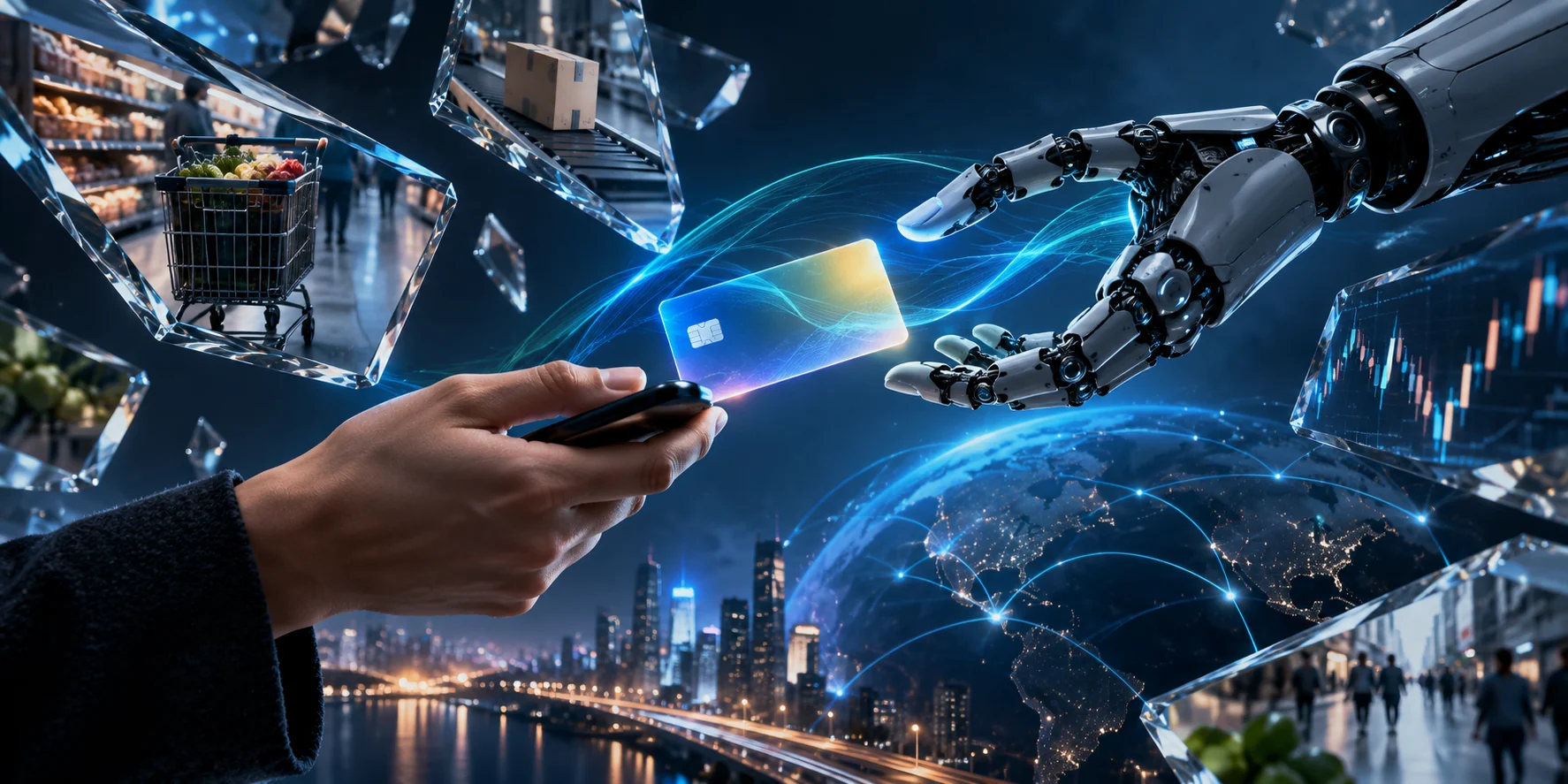
The machine was handed the money.
It was also handed the keys.
BEYOND THE STOCK MARKET
Robinhood is about investing. But the same idea is heading for the shopping cart—and the big payment companies are getting ready.
Has created payment “keys” that let an AI pay without seeing your real card number. Most uses still keep a person in the loop—for now. [2]
States the rule for its Agent Pay service plainly: “Only registered agents can transact.” It now also handles machine payments in stablecoins. [3, 4]
Is working with Mastercard and Visa on a shared way to identify AI agents across payment networks. [5]
Opened a test that lets websites charge AI agents directly, paid in USDC, a digital token tied to the dollar. [6]
These are separate services with different rules. Together they point one way: businesses are learning to accept software as a customer—and to check its papers before taking its money.
WHY DIGITAL MONEY RAISES THE STAKES
You can hand someone a twenty-dollar bill without any company approving it. Digital money is different. It depends on devices, networks and the companies that run them. A balance on a screen is only useful while you’re allowed to use it.
Some digital currencies build in the power to stop payments. Circle, which issues the USDC stablecoin, keeps the right in its terms to block certain addresses and freeze funds in specific situations, such as suspected illegal activity or terms violations. [7]
Not every system works that way, and honesty matters here. The European Central Bank says its proposed digital euro would sit alongside cash and would not be “programmable money” limited to certain uses. [8] Even so, the practical question is the same everywhere: who can stop the payment—and what happens when they get it wrong?
Cash asked who was holding it.
The new rails ask who you are.
FROM THE NOVEL
In Battle of the Seed, I explore how identity, artificial intelligence, access and allegiance could be joined together. The system—called Colossus in the story—doesn’t arrive as a threat. It earns trust by solving problems. People come to depend on it. Only later does being shut out threaten the necessities of life.
Today’s announcements don’t prove these companies share a master plan. What I see is the outline of an architecture taking shape:
Each piece can serve a good purpose. Joined into one system nobody can avoid, the same pieces could hand a gatekeeper enormous power. A person could still own money and property—and lose the permission needed to use them. And the pressure would be felt where it hurts most: the grocery order, the rent, the drive to work.
A CHRISTIAN READING
The Bible describes this kind of economic exclusion with startling clarity:
“…that no man might buy or sell, save he that had the mark…”
Revelation 13:17 · King James Version
Read it with the verses around it, and you see that worship, the image of the beast and the mark belong to one warning. Revelation 14 again ties the mark to worship and calls God’s people to stay faithful. [9, 10]
Let’s be careful and clear. An identity check is not the mark of the beast. Scripture doesn’t name an AI company or a payment app. My point is that systems joining identity, permission and money help us picture how the pressure Revelation describes could one day reach the kitchen table.

The real issue is allegiance. A system becomes spiritually dangerous when access to life’s necessities depends on obedience that belongs only to God. And a people who have grown used to letting one system decide everything may find it much harder to say no when the demand finally changes.
BEFORE YOU LET AN APP PAY FOR YOU
Know the limits you set, review its actions, and know exactly how to switch it off.
A fast, human way to fix a wrong “no” is worth more than any promise of convenience.
A second card, a bank you can walk into, some cash on hand, a local shop that knows you.
Can they still shop, work and get paid on fair terms? A good system leaves room for choice.
Tools can help us run a household. They must never become the authority that decides whom we serve.
The shoes still need buying. The bills still need paying. An assistant may help with both. What matters is that we stay free to question it, take back permission, and act without surrendering our conscience.
The machine is being handed the money.
Watch closely as it’s handed the power to decide who may use it.
Soli Deo Gloria
SOURCES
Sources checked October 1, 2026. Company announcements describe their own products and proposals. The artwork and diagrams are conceptual. Future scenarios and the connection to Battle of the Seed are the author’s interpretation.
Agents and Loops are “coming soon.” 150,000+ is a company-reported account-opening figure. Approval settings, state exceptions and customer risk are in the announcement’s disclosures.
Describes tokenized agent credentials; says most deployments so far keep a human in the loop.
The registration rule applies to this service, not to every purchase everywhere.
Machine payments across payment types, including cards and stablecoins.
Each network keeps its own verification and decision processes.
Closed beta for charging agents for digital resources in USDC; not a general retail payment system.
See the provisions on blocked addresses and frozen funds; scope and circumstances matter.
The ECB says the proposed digital euro would complement cash and would not be programmable money.
Read verses 15–17 together: worship, the mark, and exclusion from buying and selling.
Verses 9–12 connect the mark with worship and call the saints to endurance.
Book connection: Battle of the Seed, especially Chapters 24–26, develops the author’s framework of identity, cognition, access, transaction and allegiance. Colossus belongs to the novel’s fictional narrative.